
In today’s competitive restaurant industry, good reviews for restaurants help restaurants to attract customers, build customer trust, and encourage customers for repeat visits.
These days restaurants before deciding where to dine in, people often read restaurant reviews to check food quality, customer service, restaurant ambience, cleanliness, and the overall dining experience.
When restaurants receive positive customer feedback, it can influence decisions by featuring tasty dishes, friendly staff, prompt service, and value for money.
However, the effective positive restaurant reviews goes beyond generally appreciating restaurant food and services. Rather customer reviews should provide specific details about products and services that help diners to understand the aspects that make their experience with the restaurant memorable.
For restaurant owners, it is essential to understand what makes a good restaurant review important for improving customer satisfaction levels and improving their online reputation.
When restaurants receive authentic customer feedback, it can show business strengths, identify their service gaps and also support continuous improvement.
Whether customers visit a fine-dining restaurant, casual cafe, family restaurant, or fast-food outlet, the experience that they have with that restaurant can influence their future dining choices.
By encouraging visitors to add honest reviews, manage online reviews, and responding to customer opinions professionally helps businesses to build long-term relationships and improve customer loyalty.
Platforms like Clariv support businesses to manage customer feedback and also understand customer experiences. By focusing on review management, customer satisfaction, and consistent service quality, restaurants can use these valuable customer opinions into growth opportunities.
This blog will walk you through the essential aspects of outstanding restaurant reviews and practical strategies to use these reviews and make impactful changes in their operations.
Also Read: Restaurant Review Template How to Respond to Every Review
Why Good Reviews Matter for Restaurants
Good reviews for restaurants influence the way diners find, evaluate and choose dining restaurants. Because today before visiting any unfamiliar restaurants, people often check customer reviews to know about food quality, service reliability, ambience, and pricing. Customer feedback gives genuine perception that customers have about your restaurant that helps potential diners to make informed decisions.
Good reviews offer several important benefits:
- Build Customer Trust: it helps to build customer trust because when restaurants receive detailed positive feedback, it helps guests to feel confident about visiting the restaurant.
- Improve Online Reputation: customer reviews helps to improve online reputation because when restaurants receive consistently positive reviews, helps restaurants to improve their brand image across review platforms.
- Encourage Repeat Visits: customer reviews encourage repeat visits because when customers are satisfied about your food and services then they may return and recommend your restaurant to others.
- Highlight Business Strengths: Customer reviews help restaurants to know strengths of their businesses as it helps to identify popular dishes, excellent service, and memorable experiences.
- Identify Improvement Opportunities: Customer reviews helps restaurants to identify improvement opportunities as it helps to address regular problems of customers.
- Support Local Discovery: Customer reviews allow diners to compare nearby restaurants easily.
Restaurant reviews provide specific details regarding food quality, customer service, ambiance, and the overall dining experience that provides potential customers a complete picture of the restaurants above star ratings.
Ultimately, restaurants should focus on providing authentic customer experiences, respond professionally to each customer feedback, and maintain consistent food quality for earning long-term support from customers.
Also Read: Restaurant Review Sentiment Analysis
Good Reviews for Restaurants: What Makes Them Stand Out
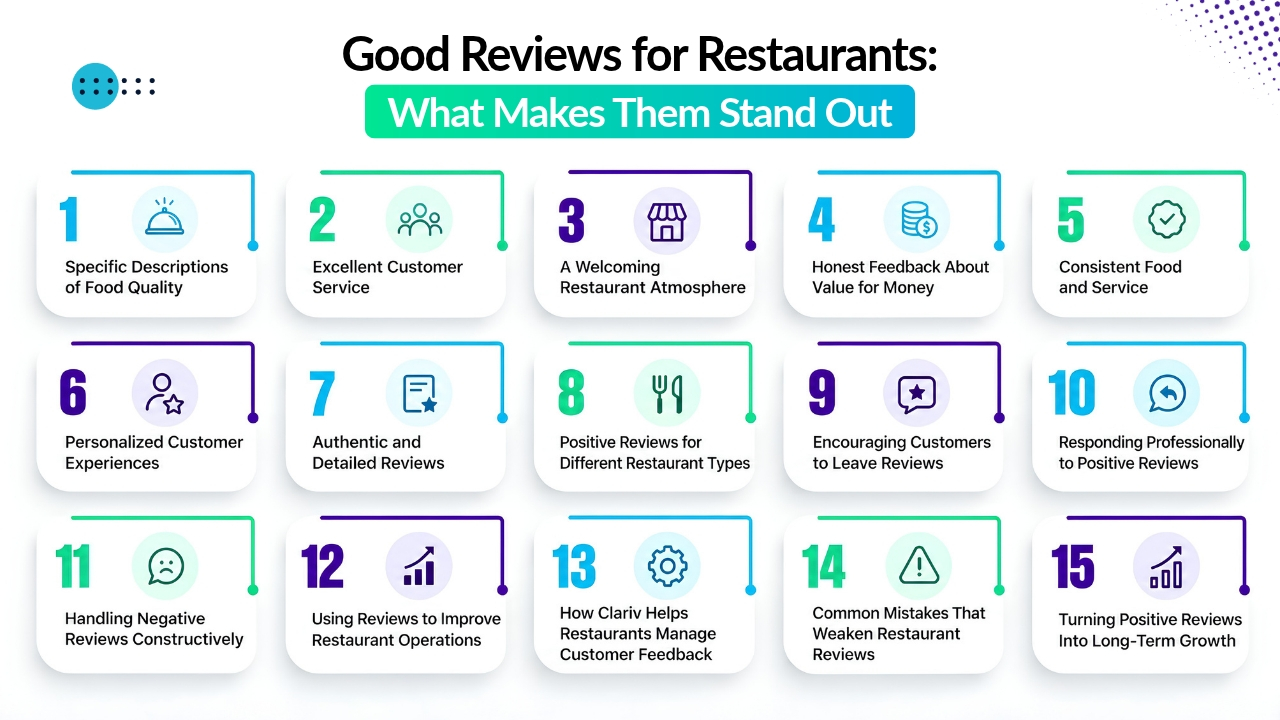
When restaurants receive good reviews about restaurants, help customers to choose the restaurant for dine-in, know the food items that will be served, and also find the restaurants that match their preferences.
When restaurants receive customer reviews that describe their food quality, customer service, ambience, and value give more insights than any generic comments or star ratings.
For restaurant owners, customer feedback gives insights about the aspects that work well and the aspects that require improvement. Restaurants by understanding customer opinions, responding professionally, and maintaining consistent services, can strengthen their online reputation and encourage their customers to visit again.
Below are the 15 essential factors that make restaurant reviews stand out and help businesses to improve customer satisfaction levels.
1. Specific Descriptions of Food Quality
Food quality is one of the important aspects of a restaurant. When customers leave a positive review about food quality it gives more credibility among potential customers.
Customers may comment about the taste, freshness, texture, temperature, presentation, and portion size of their meals. Their food descriptions help other diners to know about the food dishes that they must be trying.
For instance, rather than writing, “The food was delicious,” a customer could say,”The mushroom pasta was creamy, the herbs added a fresh taste, and the food portion arrived hot.”
Receiving detailed customer feedback helps readers to know the dining experience that they might have even before they visit the restaurant. Customer feedback helps restaurants to find the dishes that are popular among customers and know about the food dishes that customers love the most.
Restaurants should maintain consistent food recipes and to use fresh ingredients while preparing food, and check food presentation before serving meals. When restaurants maintain consistent food and service, encourage customers to return and recommend their favorite dish to others.
Also Read: How Restaurant AI Customer Feedback Tools Turn Customer Feedback into Actionable Insights
2. Excellent Customer Service
When customers experience friendly and attentive services from customers, they can turn even an ordinary served food meal into a memorable experience. Usually customers appreciate staff members who greet them warmly, explain to them about menu options, answer customer questions patiently, and handle customer requests respectfully.
A positive customer review might say, “Our server explained the menu clearly, recommended a delicious vegetarian dish, and staff members checked on us without interrupting our conversation.”
Such comments help restaurants to know the specific actions of the staff members that made the visit of the customer enjoyable. Through such comments, restaurant managers recognize employees who provide good services to customers.
While the restaurants can always improve services through training employees, clear communication. Staff members of the restaurants should always remain attentive to guests without making their services feel rushed or uncomfortable.
Because when customers feel respected and valued, then they are more likely to remember their experience positively and also recommend your restaurant to other family members and friends.
Also Read: How to Track Customer Feedback in Real-Time
3. A Welcoming Restaurant Atmosphere
One of the important aspects that customers consider while they think about their overall experience with your restaurant is the ambience. Comments about restaurant ambience include aspects such as lighting, music, seating arrangements, cleanliness, decor, and noise that influence the way customers feel during each visit.
Offering a welcoming atmosphere to customers can make a meal more enjoyable and also encourage visitors to return again.
For instance, a customer might write,” The warm lighting, comfortable seating, and soft background music created the perfect ambience for a relaxing dinner.” Such feedback helps diners to understand the aspects that make your restaurant appealing.
Different customers appreciate different ambiences. For instance, families prefer spacious seating and child-friendly seating. While couples might prefer a quiet, intimate ambience for their special occasions. While cafes are attractive to visitors who love outdoor seating, cozy interiors, and relaxing surroundings.
While it is essential for restaurant owners to maintain clean dining spaces, arrange seating comfortably, and choose lighting and music suitable for their restaurant.
When customers mention these details in their feedback, it helps potential customers to decide whether the restaurant is suitable as per their preferences, expectations, and dining occasions.
Also Read: Brand Reputation Management Software
4. Honest Feedback About Value for Money
Customers often check whether the restaurant provides good value for money to decide whether they will return again to a restaurant. Value of money depends on affordable food prices, food quality, food portion sizes, customer service, ambience, and overall customer satisfaction levels that influence customer opinions.
Receiving honest reviews about food help potential diners to understand whether the dining experience was worthy of the money they paid.
For instance, a customer might write, “The meal was more expensive than expected, but the fresh ingredients, generous portions, and attentive service made it worthwhile.” Such feedback from customers shows why the experience with the restaurant was valuable instead of just writing the restaurant to be expensive or affordable.
Restaurants can improve their perception among customers by offering good menus, accurate billing, appropriate food portion sizes, and clear details about additional charges. Providing consistent food quality and services helps customers to feel satisfied with their spending.
When diners understand what they are paying for and believe the experience meets their expectations, then they are more likely to revisit the restaurant and also recommend it to others.
Customer reviews that discuss fair prices helps them to build credibility and let potential customers make informed dining decisions.
Also Read: AI Tools to Analyze Customer Reviews
5. Consistent Food and Service
Being consistent with food and services is essential for building customer loyalty and maintaining a strong restaurant reputation. Diners expect their favorite dishes to taste delicious on every visit and appreciate receiving reliable services regardless of when they arrive. Providing consistent food and service experiences to customers encourages them to return and recommend the restaurant to others.
For instance, a customer might write, “The food tastes just as good every time we visit, and the friendly staff always make us feel welcome.” Such review highlights the restaurant’s ability to maintain quality and deliver dependable service.
Restaurants can achieve food and service consistency through standardized recipes, fresh ingredient checks, regular staff training, and routine quality inspections. Kitchen and service teams should communicate effectively to ensure that the orders are prepared accurately, presented properly, and served at the right temperature.
Managers should also track customer feedback about cold food, inconsistent seasoning or inaccurate orders. Addressing recurring complaints helps to avoid similar problems and improves customer satisfaction.
When restaurants consistently meet customer expectations, they build trust, encourage repeat visits, and establish a reputation for dependable food quality and excellent service.
Also Read: Funny 1 Star Reviews Lesson From Restaurant Mistakes
6. Personalized Customer Experiences
Providing personalized experiences to customers makes the visits to the restaurant more enjoyable and memorable. It involves staff members showing small, thoughtful gestures such as recommending suitable dishes, considering customer requests, and helping to arrange a birthday dinner, all these gestures having a lasting impression on guests. These gestures encourage customers to share only positive feedback about restaurants.
For example, a guest might write, “The staff helped us organize a birthday dinner and made the evening feel special without being formal.” Such customer review shows that attentive services of the staff to customers can improve the overall dining experience.
Personalization works well when the hotel staff listen to their customers carefully rather than making assumptions about customer preferences. Staff members should answer the customer questions confidently, and provide valid recommendations based on individual customer needs.
Restaurant owners can provide personalized services to customers by training their employees to recognize the opportunities that make the guests feel welcome and appreciated.
With simple gestures such as remembering a regular customer’s favorite food order or acknowledging a special occasion of the customer, restaurants can improve their relationships with the customers.
When diners feel that they are valued in a restaurant, then they are more likely to return, recommend the restaurant, and share detailed reviews regarding memorable experiences.
Also Read: Client Review for Legal Services
7. Authentic and Detailed Reviews
Authentic customer reviews offer believable descriptions about real dining experiences. General comments received from customers such as “Everything was perfect” shows that customers are satisfied but provide only less information about the restaurant.
A more useful review might say, “We visited for lunch and enjoyed the grilled paneer with fresh sides. The staff explained the menu clearly, and our order arrived quickly.” Such comments from customers describe the occasion, food, and services. It helps restaurants to know about the aspects that made their visit enjoyable.
Customers do not need to write reviews in detail, rather if they include one or two details about food and services can make a short review useful.
Restaurants should encourage customers to add honest feedback rather than asking customers to leave only positive ratings. Genuine customer reviews build trust and provide more valuable information than detailed testimonials or generic phrases.
Also Read: How to Use Review Monitoring Software to Manage Your Online Reputation
8. Positive Reviews for Different Restaurant Types
Different restaurants provide different experiences, so customer reviews should show the qualities that customers value most.
For a fine-dining restaurant, a customer review might highlight food presentation, knowledgeable service, and a carefully placed meal. A casual restaurant review may focus on generous food portions, reasonable prices, and friendly staff.
Family-friendly restaurants can receive praise for suitable food menu choices, comfortable seating, and relaxed services. Cafes may stand out for excellent coffee, fresh pastries, and a peaceful ambience..Takeaway and delivery reviews should consider order accuracy, packaging, food temperature, and delivery timing.
For example, a delivery customer might write, “My order arrived on time, the packaging was good, and every item was still warm.”
Such instances show that when customer reviews address the features that are relevant to each dining experience. Published customer reviews should always show the actual experience that the customer had with your restaurant.
Also Read: Why Customer Review are Important for Business Growth
9. Encouraging Customers to Leave Reviews
Restaurants can encourage customers to leave reviews by making the process to add reviews simple and convenient for customers. Restaurants must ask a polite request after a meal or send a follow-up message to remind customers that their opinions also matter.
Businesses can share the review links to the customers directly through receipts, booking confirmations, or appropriate customer communications. Sending QR codes to customers can also give them quick access to review pages.
However, when restaurants ask customers to add reviews, they must not interrupt them when they dine or pressurize customers to give five-star ratings.
Instead restaurants should ask customers to add honest opinions about their experiences through constructive criticism. When restaurants make the process convenient for customers, then they can help customers to share experiences and provide restaurant owners more ways to understand whether customers are satisfied with your food or services.
Also Read: How to Write a Review on Facebook
10. Responding Professionally to Positive Reviews
Responding to positive reviews shows customers that the restaurant appreciates their feedback. So if the customer leaves a positive review , then the restaurant must acknowledge the visit and mention a specific detail whenever appropriate.
For instance, a restaurant could respond, “Thank you for visiting us. We are delighted that you enjoyed the grilled paneer and found our team welcoming. We look forward to seeing you again.”
Sending personalized responses to customers makes them feel more genuine than sending the same message under every review. Restaurants should send friendly, clear and professional replies to customers.
Acknowledging customers about their experiences also shows customers that the business values their relationships with guests. While consistently engaging with customers can improve connections with customers and help restaurants to establish a more welcoming online reputation.
11. Handling Negative Reviews Constructively
Receiving negative reviews can show problems that restaurant owners may not notice during daily operations. If customers are complaining about long waiting times, inaccurate orders, poor communication, or poor food quality then it requires careful attention.
When restaurants receive negative reviews then they must respond calmly, acknowledge the problem, and apologize when appropriate. For instance, a response could say, “We are sorry your order took longer than expected. We understand your frustration and are reviewing our service process to help prevent similar delays.”
Businesses should avoid getting into any argument with reviewers or making promises that they cannot keep. If any further evaluation is required, then restaurants can ask the customers to continue the discussion privately.
The goal is not just to protect the restaurant’s reputation but to understand the aspects that went wrong and take reasonable steps to improve the experience.
12. Using Reviews to Improve Restaurant Operations
Customer feedback becomes more valuable when businesses find recurring themes instead of considering every comment as an isolated incident. When customers frequently praise a signature dish, it may suggest an opportunity to feature it prominently on the menu.
Restaurant managers can categorize customer feedback into different categories such as food quality, service speed, cleanliness, atmosphere, pricing, reservations, and delivery accuracy.
Then they can compare these aspects with operational details to find practical improvements. For example, if waiting-time complaints increase during weekend dinner service, then managers can review staffing levels, preparation schedules, and table management.
Using customer feedback in this way helps restaurants to make informed decisions and focus on changes that improve customer satisfaction.
13. How Clariv Helps Restaurants Manage Customer Feedback
Managing customer reviews across different platforms can be challenging for restaurants, especially those operating several locations. Clariv has capabilities for customer sentiment and reputation management that help restaurants to organize customer feedback and understand customer experiences.
Its capabilities help restaurant teams:
- Centralize Feedback: Organize supported reviews and customer comments.
- Analyze Sentiment: Identify recurring problems about food, service, pricing, and delivery.
- Recognize Problems: Monitor customer feedback patterns and emerging customer problems.
- Support Responses: Prepare professional replies using AI-based tools.
- Coordinate Locations: Manage customer feedback across multiple branches.
While restaurants should verify their problems, review AI-based responses and evaluate Clariv’s integrations, features, permissions, and pricing before selecting the platform.
14. Common Mistakes That Weaken Restaurant Reviews
Several common mistakes that restaurants make can reduce the customer feedback and weaken the online reputation of the restaurant. The first mistake that restaurants make is that businesses should not focus only on star ratings. Rather written customer comments can explain why customers are satisfied or disappointed.
The second mistake that restaurants make is to ignore negative reviews that can make customers feel that their problems are not important. While restaurants responding professionally to customer reviews can show that the restaurant is willing to listen to their customers.
The third mistake that restaurants can make is that generic replies can seem impersonal. Responses from restaurants should acknowledge the specific problem or compliment whenever possible.
The fourth mistake that restaurants can make is to not overlook repeated complaints. Because recurring problems faced by customers need investigation and practical solutions.
Finally, businesses should avoid fake reviews, exaggerated claims designed to generate positive ratings.
Having a strong reputation for businesses is built through consistent experiences, honest communication with customers, and a willingness to improve.
Tracking reviews across relevant channels helps restaurants to maintain a clearer understanding of customer expectations.
15. Turning Positive Reviews Into Long-Term Growth
Good reviews from customers for restaurants are more than compliments. Good reviews provide important information that help businesses to understand customer expectations, recognize their strengths, and find opportunities to improve their operations.
Restaurants can turn positive reviews into long-term growth by maintaining food quality, training staff, providing comfortable ambiences, and delivering reliable services consistently. Customers should respond professionally to reviews and analyze recurring problems.
Customer sentiment tools like Clariv support this process by helping teams to organize feedback, identify patterns, and coordinate responses across supported channels.
Ultimately, managing customer reviews successfully involves both listening and taking appropriate actions. Restaurants that take customer opinions seriously can make more informed decisions, improve relationships with diners, and create worthy experiences that they may recommend to others.
Customers leave positive reviews when they have genuine reasons to praise a restaurant and when businesses consistently work to deliver experiences that encourage guests to return.
Conclusion
Receiving good reviews from restaurants is essential for building customer trust, improving online reputation, and attracting new diners. While customer reviews should go beyond simple star ratings by describing certain details about food quality, customer service, restaurant ambience, cleanliness, and value for their money.
When customers have genuine experiences help other potential customers to know what to expect and make confident decisions about dining.
For restaurant owners, customer feedback provides good opportunities to recognize restaurant strengths, address recurring problems, and improve the overall dining experience.
By encouraging customers to leave honest reviews, and responding professionally to customer opinions, and maintaining consistent service quality help businesses to develop stronger relationships with their audiences. While restaurants should focus on delivering memorable experiences to customers instead of just receiving five-star ratings from customers.
Effective management of customer reviews helps businesses to understand customer expectations and identify aspects that they need to improve. Tools like Clariv can support restaurants in managing customer feedback and gaining insights into customer experiences.
Using these insights strategically helps restaurant teams to make informed decisions that lead to customer satisfaction and achieve long-term growth.
Ultimately, the best restaurant reviews show authentic experiences that customers genuinely want to share. When restaurants focus on quality, listen to customer opinions, and act on constructive feedback, they can encourage repeat visits, generate positive recommendations, and establish a reputation in a highly competitive restaurant industry.
If you still have any query about good reviews for restaurants and what makes them stand out, then you may write to us at Clariv and we are more than happy to assist you.