In today’s digital market, a brand’s reputation is not just defined only by its products or services. While brand reputation is shaped by what customers see, read, and share online.
Whenever consumers search for reviews about your business, browse social media platforms, read blog articles, or find search engine results, then their perception of a business is highly influenced by its digital presence.
This makes Online Reputation Management(ORM) an important component of modern business success.
Online reputation management involves the process of tracking, influencing, and improving the way a brand, organization, or individual is considered across different digital channels.
This involves managing online reviews, responding to customer feedback, tracking brand mentions, improving search engine results.
It helps to maintain an overall positive social media presence and address negative content before it damages the credibility of your business.
In an era where even a single negative review or viral complaint can affect customer trust, it is essential for businesses to take a proactive approach for protecting their brand image online.
While a strong online reputation helps businesses to build trust, attract new customers, increase customer conversions, and strengthen long-term relationships with their audience.
If the negative feedback, poor customer experiences, or unfavorable search results is not managed then it can cause lost revenue and reduced brand loyalty.
This is why organizations of all sizes are investing in reputation management strategies, review management, social media monitoring, and search engine optimization(SEO) to maintain a positive digital presence.
This complete blog will walk you through everything you need to know about Online Reputation Management, which includes its importance, crucial components, best practices, tools, challenges, and emerging trends.
Whether you are a small business owner, marketing professional, entrepreneur, or corporate leader, if you understand and implement effective ORM strategies can help you to protect your brand, improve credibility, and achieve sustainable business growth in this interconnected world.
Also Read: How to Use Review Monitoring Software to Manage Your Online Reputation
What Is Online Reputation Management?
It involves the process of monitoring, influencing, and maintaining the way a business, brand, professional, or organization is perceived across all digital channels.
In this highly connected world, consumers often search for companies online before buying any product or choosing any service. Reviews, social media conversations, search engine results, and customer feedback all these factors are essential for maintaining a brand’s reputation.
This helps businesses to ensure that the right, positive, and trustworthy details are visible while also resolving problems which may negatively affect public perception about your brand.
Important activities involved in Online Reputation Management include:
- Tracking online brand mentions across websites and social media platforms.
- Managing and responding to customer reviews and ratings.
- Handling negative publicity and customer complaints professionally
- Improving search engine visibility with SEO strategies
- Creating a positive brand sentiment with your quality content and engagement
- Protecting your brand credibility and maintaining customer trust.
A successful ORM strategy offers several business benefits:
- It helps to build customer trust and confidence.
- It enhances brand credibility and authority.
- Improves customer retention and loyalty.
- Attracts new customers and business opportunities.
- It strengthens online visibility and digital presence.
- It reduces reputational risks and potential crises.
- It supports sustainable long-term business growth.
Also Read: Google Review Management Software
Why Online Reputation Management Matters
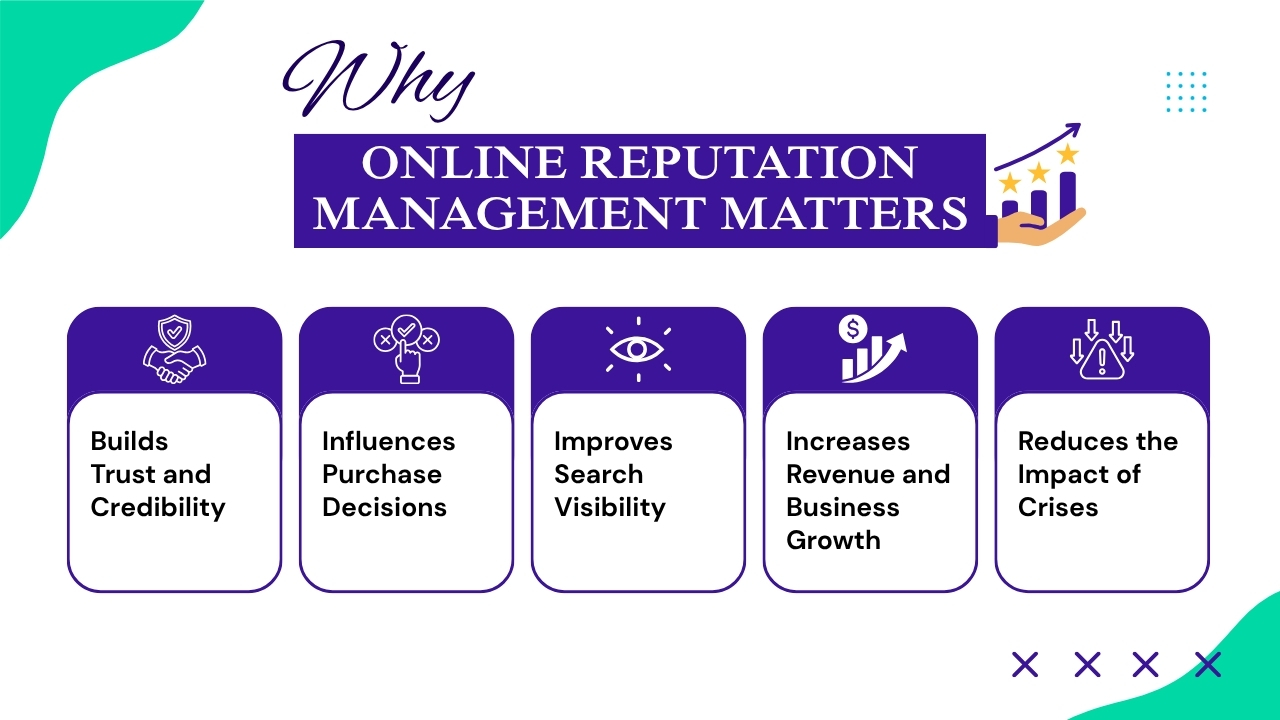
Being in today’s digital market, customers depend highly on online data before making any purchasing decisions. Reviews, ratings, search results, social media profiles, and customer experiences all affect how people perceive your business.
A strong online reputation can highly influence customer trust, brand visibility, and overall business success.
1. Builds Trust and Credibility
A positive online reputation helps to build trust among potential customers. Businesses that have positive reviews, maintain active social media profiles, and respond professionally to every feedback are often considered as reliable and trustworthy.
Having a strong credibility encourages customers to select the brand more confidently.
Also Read: Brand Reputation Management Software
2. Influences Purchase Decisions
Most consumers research your businesses before buying a product. And if the consumers find positive reviews, high ratings, customer testimonials, and strong recommendations creates confidence about the brand.
Having a favorable reputation can highly affect buying decisions and help businesses to stay ahead of their competitors.
3. Improves Search Visibility
Search engines usually rank brands higher when they show credibility, reliability, and strong authority in their industry.
Positive reviews, quality content, and active customer engagement can improve search rankings, increase website traffic, and improve online visibility. While having a better search performance helps to attract more potential customers.
Also Read: How AI Can Analyze Customer Feedback
4. Increases Revenue and Business Growth
A strong reputation causes higher conversion rates, customer referrals, and improved customer retention.
Satisfied customers are more likely to make repeat purchases and also recommend the business to others, which creates long-term growth opportunities and higher profits.
5. Reduces the Impact of Crises
Businesses that have good credibility can recover quickly from negative reviews, customer complaints, social media criticisms, or public relations challenges.
Implementing effective reputation management helps organizations to respond more professionally, maintain customer trust, and reduce the long-term impact of reputational problems.
Also Read: How to Measure Customer Sentiment
Key Components of Online Reputation Management
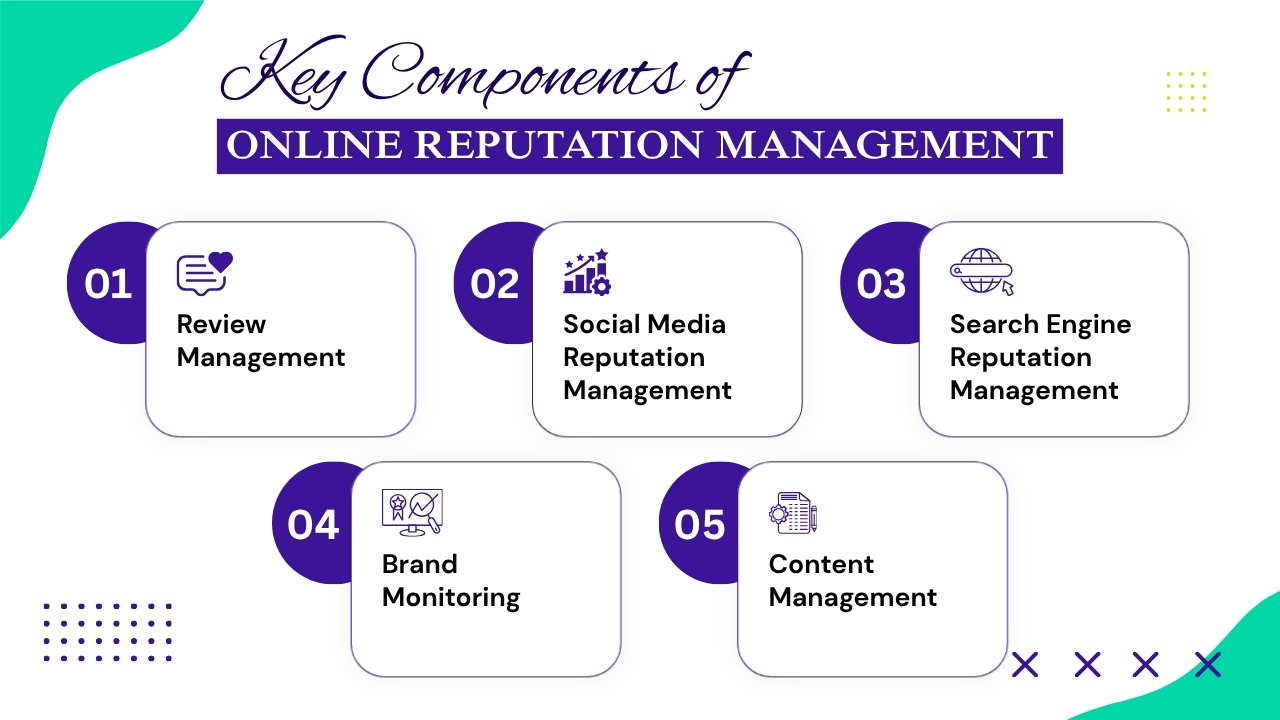
Effective Online Reputation Management(ORM) depends on several components interconnected that work together to build, maintain, and protect the brand image online.
Each component has a unique role in shaping customer perceptions and strengthens brand credibility.
1. Review Management
Online reviews highly influence customer decisions of buying products or services. This involves tracking reviews about your business on several review management platforms like Google, Yelp, Facebook.
For effectively managing reviews involves encouraging customers to add their feedback, respond instantly to customer reviews, and address customer problems professionally.
This also involves using customer insights to improve their products or services. Because a strong review strategy helps to build customer trust and satisfaction.
Also Read: How to Manage Online Reviews for Your Business
2. Social Media Reputation Management
Social media allows customers to share opinions and experiences about your business in real time. Businesses that regularly track brand mentions, engage with audiences, responding to customer inquiries, address customer complaints, and consistent messaging.
When businesses actively manage social media, it helps them to build strong relationships with customers, increase awareness about the brand, and helps businesses to maintain a good brand reputation.
3. Search Engine Reputation Management
Search engine results often influence the first impression of the customer about your brand and how your business is viewed online.
Therefore businesses should prioritize ranking positive content, publishing their resources, improving brand-related pages, and improving the visibility of positive customer reviews and testimonials.
Managing good reputation about your businesses online helps to ensure that the right and trustworthy information appears prominently in search results.
4. Brand Monitoring
This involves monitoring online customer conversations, customer discussions, product mentions, competitor activities, and industry trends.
When businesses consistently track digital channels, then they can identify the problems, understand customer sentiment, and respond instantly to risks of any brand reputation.
Tracking your brand in real-time helps to make better decisions and protect brand reputation.
5. Content Management
This involves creating and publishing essential business details online. Managing content helps to improve brand authority and trust.
Businesses should consistently publish blog articles, case studies, customer success stories, educational resources, industry insights, videos, and webinars.
Offering good quality content not increases customer engagement but also supports SEO efforts and improves reputation of businesses online for long-term.
How Customers Form Online Opinions
It is essential for businesses to understand how customers form online opinions for effectively managing online reputation. Before buying a product or selecting a service, customers often research about businesses online to check credibility, quality, and reliability of the business.
Customer opinions are influenced by different digital factors which include search results, reviews, recommendations, and social media activity. All these factors together shape the perception of a customer online of a brand and affect buying decisions of customers.
1. Search Results
Often customers gather information about your business on search engines. Before choosing a brand, customers may search for company name, their product or service details, customer reviews, complaints, ratings, and testimonials before selecting a business.
Business details which appear in search results strongly influence first impressions about your product which influences customer trust.
Providing positive, right and valid content can encourage more engagement from customers, while negative or misleading business details may encourage more engagement from customers while misleading business details may discourage potential customers from selecting the brand.
2. Reviews and Ratings
Online reviews and star ratings are strong indications of the credibility and reputation of the business. Because most consumers compare ratings and read customer feedback before purchasing a product.
Even if there is a small difference in business ratings can affect whether a customer selects one brand over another. Where positive reviews build trust, increases customer confidence, and encourages buying products from your business.
While negative reviews may create concerns about product quality, service standards, and reliability. Regularly managing reviews helps businesses to maintain a positive image among customers and also attract more customers.
Also Read: How to Respond to Negative Customer Reviews
3. Social Proof
Social proof influences customer opinions about your business because people usually trust the experiences and recommendation of others. Customer testimonials, online reviews, and personal recommendations usually validate the credibility of your business.
When potential customers see that there are positive experiences shared by customers, then other customers feel confident about the business.
Though the strong social proof helps to build trust, improves brand reputation, and encourages customers to make purchasing decisions.
4. Social Media Presence
An active social media indicates the business’s commitment to customer engagement and being transparent about their product or services.
Customers usually verify businesses the way they respond to comments, communicate openly, show their brand details, and interact with followers.
Being consistent and building impactful engagement with customers help to build trust, improve brand perception, and improve relationships with customers.
An effective social media presence encourages brand loyalty and supports long-term business growth.
Also Read: Social Media Management Tools For Non-Profits
Building a Strong Online Reputation
Building a strong online reputation requires businesses to be proactive and consistent. Businesses should not wait for negative feedback or any reputation problems to happen, rather businesses should create positive customer experiences and maintain a good digital presence.
Below strategies can help organizations to establish and strengthen their online reputation.
1. Deliver Outstanding Customer Experiences
Customer satisfaction is one of the important factors for building a positive brand reputation. Businesses that consistently offer high-quality products, good services, fast customer support, and reliable experiences are more likely to earn customer trust and loyalty.
Positive experiences naturally encourage customers to add positive reviews, recommend the business to others, and also become repetitive customers. Hence, investing in customer satisfaction is one of the effective ways to build a strong brand reputation.
2. Encourage Customer Reviews
Customer reviews are also essential for shaping public perception. Because many satisfied customers are willing to share their feedback but may need a simple reminder.
Businesses can encourage customers to leave reviews by sending follow-ups, emails after purchases, requesting feedback at the right times, using QR codes that connect directly to review links to emails, receipts, or other customer communications.
Such simple strategies help to increase customer participation and help to build a stronger online reputation. By making the review process instant and convenient increases participation.
3. Maintain Consistent Branding
Maintaining consistent branding across every customer interaction increases brand recognition and helps to build long-term trust with customers.
It is essential for businesses to maintain consistent messaging, visual identity across websites, social media platforms, advertising campaigns, customer communications, and marketing materials.
A consistent brand image improves professionalism, builds customer confidence, increases brand awareness, and shows dependability at every phase.
4. Publish Valuable Content
Offering high-quality content helps businesses to show expertise and establish authority within their industry. While valuable content can educate customers, answer their queries, and increase brand credibility.
For instance, include industry guides, tutorials, research reports, educational videos, and thoughtful leadership articles. Regular content publishing also supports search engine visibility and audience engagement.
5. Engage With Your Audience
Active customer engagement helps to build stronger relationships with customers and build trust with the audience. Businesses should actively engage with audiences by responding to comments, answering their queries, acknowledging customer feedback, and participating in valid conversations.
Impactful interactions of businesses with customers shows that businesses value their customers, improve relationships, and build customer trust, which is essential for developing and maintaining a positive online reputation.
Managing Online Reviews Effectively
Online reviews are one of the crucial factors affecting the reputation of the brand. Because it shapes the way other customers view your business, influence their buying decisions, build customer trust, and provide valuable insights which help businesses to improve their product, services, and customer experiences.
1. Respond to Positive Reviews
Positive reviews about a business increases opportunities for businesses to improve relationships with customers and reassure brand loyalty. Businesses should thank their customers for their feedback.
A simple response like, “Thank you for your kind words. We are delighted to hear you enjoy your experience,” indicates appreciation from the brand and encourages engagement with the brand in the future.
Responding to positive reviews can increase customer loyalty, encourage repeat purchases, and show potential customers that businesses value their audience.
2. Respond to Negative Reviews Professionally
Negative reviews should be handled by businesses with professionalism and care. Businesses should remain calm, address problems of the customers, apologize when needed, and provide practical solutions.
If required, businesses should move discussion with customers to private channels for resolution. They should avoid any argument, becoming defensive, or blaming customers because these actions can further damage the reputation of the brand.
3. Learn From Customer Feedback
Customer reviews give insights about customer expectations and business performance. Businesses should regularly analyze recurring feedback regarding product quality, customer service, delivery processes, pricing, and user experience.
Identifying common problems in businesses helps them to make improvements, increase customer satisfaction and strengthen their overall brand reputation over time.
Also Read: How to Track Customer Feedback in Real-Time
Social Media and Reputation Management
Social media is essential for shaping the perception of a brand. A single post, comment, or customer identification can influence customer opinions and spread quickly on all digital platforms.
Hence, it is essential for businesses to actively manage their social media presence to protect and increase their brand reputation.
1. Establish Clear Communication Guidelines
Organizations should establish clear communication guidelines. It should define their brand tone, response times, customer interaction standards, and crisis communication procedures.
All these guidelines ensure that there is consistency across all channels which help employees to communicate professionally and effectively.
Establishing consistent communication establishes strong brand identity, builds customer trust, and enables organizations to respond confidently in various situations.
2. Monitor Brand Mentions
Businesses should actively monitor brand mentions as customers often discuss products and services without tagging their official accounts.
When businesses track hashtags, brand names, product names, and industry-specific keywords helps organizations to find customer opinions, find engagement opportunities, and resolve problems early, and gain insights which supports effective reputation management and customer relationship building.
3. Address Issues Quickly
Instant responses can prevent small problems from becoming larger reputation issues. Addressing complaints and concerns of the customers early indicates that the businesses are accountable, responsive, and committed to customer satisfaction.
4. Create Positive Engagement
Brands should create and share content that encourages discussion, education, entertainment, and community building among their audience.
Positive engagement with customers helps to improve relationships with customers, increases brand loyalty, and improves overall brand perception.
Offering valuable and interactive content, helps businesses to build stronger connections with customers and develop an active, supportive online community.
Also Read: Social Media Management Tips for Small Businesses
Online Reputation Monitoring Tools
Technology has made Online Reputation Management efficient by offering tools that help businesses to track, analyze, and respond to online activity.
These tools help businesses to track customer feedback, brand mentions, and industry patterns from a centralized platform which allows faster decisions and effective reputation management.
1. Review Monitoring Platforms
These tools help businesses to track customer reviews across several websites from a single dashboard. This makes it easier to manage customer feedback, respond to customer reviews instantly, and identify patterns in customer satisfaction.
2. Social Listening Tools
These tools helps businesses to track brand mentions, online conversations, customer sentiment, and new trends across all digital platforms.
These insights help organizations to understand public opinion, identify customer requirements, identify potential concerns early, and respond effectively. By analyzing customer behavior, businesses can improve engagement strategies, and improve their overall online reputation.
3. SEO and Media Monitoring Tools
These tools help businesses to track their search rankings, brand visibility, keyword performance, news mentions, press coverage, and industry discussions.
Automating all these tracking activities helps organizations to collect insights, respond to problems more quickly, improve decision-making, and effectively protect, manage, and improve their online reputation and brand presence.
Also Read: Google Review Management Software
Measuring ORM Success
Measuring whether the online reputation management(ORM) strategies were successful is essential to understand the effectiveness of the brand’s reputation-building efforts.
Businesses should regularly track important performance indicators(KPIs) to analyze customer perception, online visibility.
1. Review Metrics
Review-related metrics provide insights about customer satisfaction and brand reputation. Businesses should track:
- Average rating
- Review volume
- Response rate
- Response time
These metrics help to analyze the way customers perceive your brand and how effectively businesses manage customer feedback.
2. Brand Sentiment
Brand sentiment analysis helps organizations understand public opinion by tracking:
- Positive mentions
- Neutral mentions
- Negative mentions
Tracking customer sentiment about your business helps to identify reputational risks and find opportunities for improvement.
3. Search Visibility
Search engine performance is a key indicator of online reputation. Businesses should track:
- Branded keywords
- Search rankings
- Search result quality
Strong search visibility helps ensure positive content is easily accessible to potential customers.
4. Customer Engagement
Engagement metrics reflect audience interaction and brand awareness. Important indicators include:
- Comments
- Shares
- Mentions
- Social media interactions
Higher engagement often signals stronger customer relationships and trust.
5. Website Performance
Website analytics help measure the business impact of ORM efforts. Key metrics include:
- Website traffic
- Conversion rates
- Bounce rates
- Lead generation
Such indicators show how reputation management causes business growth and acquiring more customers.
Conclusion
Online Reputation Management (ORM) is an essential business strategy in today’s digital market where customer opinions, online reviews, search engine results, and social media interactions highly influence the way the brand is perceived.
Where a strong online reputation helps businesses to build trust, attract new customers, improve search visibility, and drive long-term growth.
On the contrary, negative feedback, poor customer experiences, or unmanaged online conversations can damage credibility of the brand and affect their revenue.
An effective ORM needs a proactive approach which involves monitoring brand mentions, managing reviews, engaging with customers, optimizing search results, publishing valuable content, and preparing for potential reputation crises.
By consistently offering positive customer experiences and responding professionally to customer feedback, businesses can make their brand reputation strong and also gain trust from customers.
As digital platforms keep evolving, organizations which invest in reputation management will be better placed to stand out in competitive markets.
Ultimately, a positive online reputation is one of the valuable assets that a business can have, which helps to achieve sustainable success, build strong relationships with customers, and lasting brand credibility.
If you still have any query about online reputation management then you may book a free demo at Clariv and we are more than happy to assist you.