In this highly competitive business market, customer satisfaction has become an important factor that determines the success of a company in the long run.
Customers expect businesses to offer exceptional experiences, high-quality products, and prompt support at every phase of customer journey.
Businesses that focus on improving customer experience, customer engagement, and service quality have more chances to build trust and develop lasting relationships with their customers.
When customers are satisfied, then they not just make repeat purchases but also help businesses to build positive brand reputation through customer recommendations and positive online reviews.
To improve customer satisfaction, businesses must first understand customer needs, their preferences, and customer expectations.
Gathering and analyzing customer feedback software for small businesses helps them to identify the strengths, weaknesses and also make informed decisions that improve their overall performance.
By providing excellent customer service, personalized solutions, and maintaining transparent communication are essential strategies for businesses to offer memorable experiences.
Additionally businesses use data analytics, customer relationship management(CRM) systems, and digital technologies that better understand customer behavior and provide personalized services.
Active staff involvement plays an important role in improving customer satisfaction. Because well-trained and motivated employees can respond effectively to customer problems and provide consistent support across all areas.
Businesses that prioritize customer retention, continuous improvement, and customer loyalty can have a competitive advantage in the market.
Adopting a customer-centric approach and investing in long-term building relationships with customers, businesses can increase customer trust, improve operational performance, and achieve sustainable business growth while maintaining high levels of customer satisfaction.
Also Read: Social Media Management Tips for Small Businesses: 15 Expert Strategies to Grow Faster
What is Customer Satisfaction?
Customer satisfaction is the level up to which a company’s products, services, and overall customer experience either meet or exceed customer expectations.
It shows how customers feel after buying a product or using a service from a business and works as an indicator of business performance. Customers that consistently satisfy their customers are more likely to build strong relationships with customers, increase customer loyalty, and achieve long-term growth.
There are several factors influencing customer satisfaction and shaping the way customers view a business. These include:
- Product quality: Customers should be provided with reliable, durable, and high-performing products.
- Service quality: Businesses must offer professional, helpful, and consistent customer support.
- Pricing: Businesses should provide fair and competitive prices that offer value.
- Communication: Businesses should maintain clear, honest, and timely interactions.
- Convenience: Businesses should make purchasing and customer support processes more simple and accessible.
- Response times: Businesses should address customer inquiries and problems quickly.
- Personalization: Businesses should personalize products, services, and recommendations, and individual needs.
- Problem resolution: Businesses should effectively solve customer complaints and concerns.
Satisfied customers generate high benefits for businesses. Because if the customer is satisfied then they are more likely to become repeat buyers, recommend your business to others, leave positive customer reviews, and remain loyal for more durations.
As a result, customer satisfaction directly causes higher profits, stronger brand reputation, and sustainable business growth.
Also Read: How AI Can Analyze Customer Feedback & Why It Matters the Most in 2026
Why Customer Satisfaction Matters
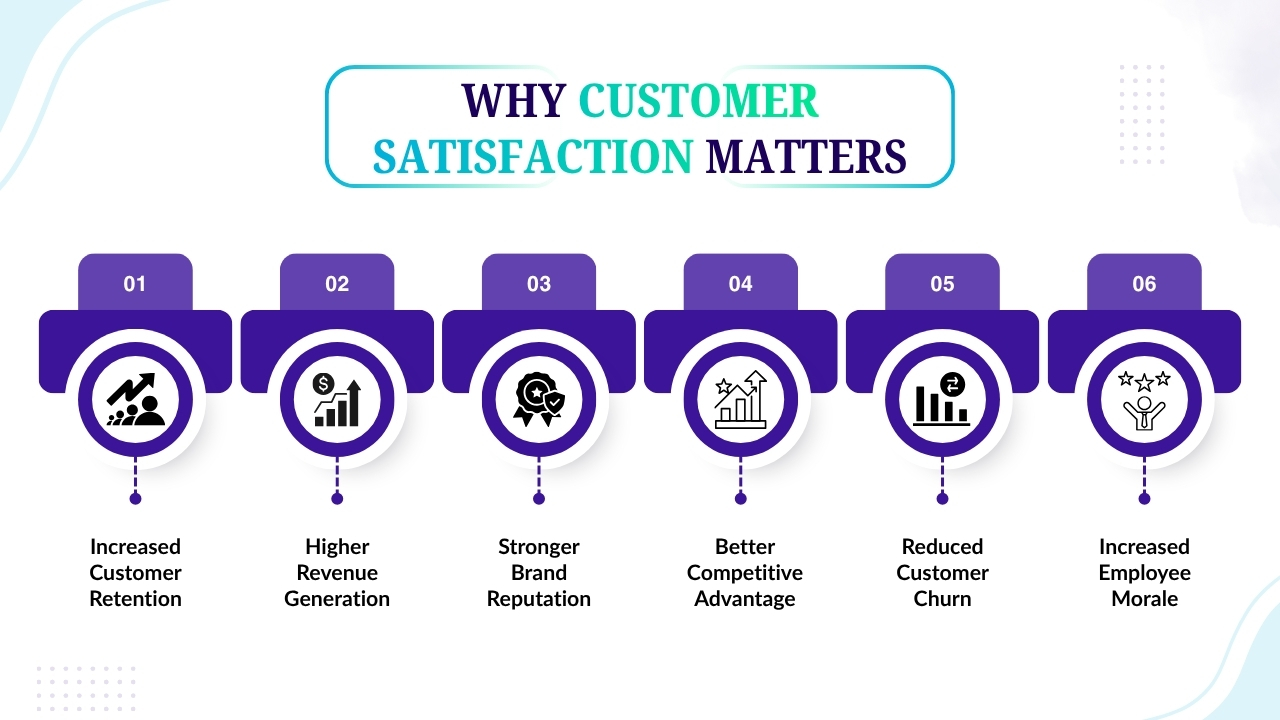
Improving customer satisfaction offers many benefits that directly causes business profits, profits, and long-term sustainability.
1. Increased Customer Retention
For businesses to retain existing customers is more cost-effective than acquiring new customers. If customers are satisfied then they are more likely to continue purchasing from a brand, which reduces marketing expenses for businesses and helps businesses to build long-lasting relationships.
2. Higher Revenue Generation
Loyal customers usually spend more money or are willing to purchase more products or services. Such repeated transactions from customers create a stable source of income and cause consistent business growth.
3. Stronger Brand Reputation
Customers who have positive experiences have high chances to share favorable reviews and recommend the business to friends, family, and colleagues.
A strong reputation increases customer trust and attracts potential customers.
4. Better Competitive Advantage
Businesses that prioritize customer satisfaction have more competitive advantage over others. By offering exceptional customer service and consistently fulfilling customer expectations helps organizations to stay ahead in competitive markets.
5. Reduced Customer Churn
If customers are satisfied then there are less chances that they may switch to other brands. By addressing customer requirements and resolving customer problems instantly helps businesses to reduce customer loss and maintain more loyal customers.
6. Increased Employee Morale
Happy customers offer a more positive work environment for employees. When staff receive positive feedback and interact with customers, then their productivity, job satisfaction also increase causing overall business performance.
Also Read: AI Tools to Analyze Customer Reviews
Understanding Customer Expectations
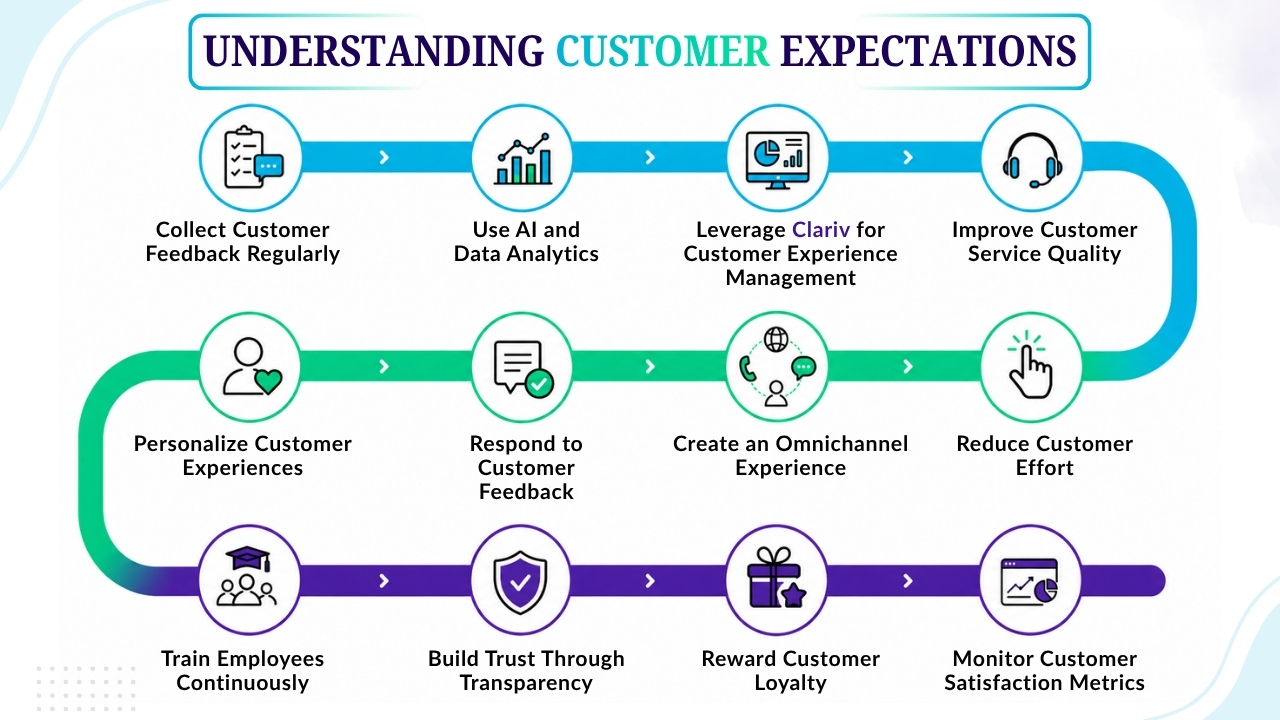
Customer expectations are quickly changing in this digital era. As customers expect quick responses, personalized experiences, user-friendly platforms, transparent details, and convenient support channels.
Businesses must continuously adapt to these changing customer demands and actively understand customer needs, as meeting customer expectations is essential for improving customer satisfaction and building customer loyalty.
1. Collect Customer Feedback Regularly
Understanding customer experiences about your business cannot improve customer satisfaction. Businesses should regularly collect customer feedback that gives insights about customer requirements, customer preferences, and areas that need improvement.
Tracking customer feedback helps businesses to identify problems early and make informed decisions to improve products and services.
Businesses can collect feedback through several channels:
- Surveys: Surveys ask targeted queries like, “How satisfied are you?” and “What can we improve?”.
- Online Reviews: Online reviews analyze customer reviews to find strengths and weaknesses of business.
- Social Media: Social media tracks customer comments, mentions, and conversations about business.
- Support Interactions: It involves verifying customer service experiences and customer complaint resolutions.
- Emails: Send post-purchase feedback requests on email to customers.
When businesses consistently collect and analyze customer feedback helps businesses to understand customer expectations, improve service quality, and identify opportunities for growth.
When businesses work on customer suggestions, it helps businesses to improve customer relationships, increase customer loyalty, and create overall better customer experience.
Also Read: Why Customer Reviews Are Important for Business Growth
2. Use AI and Data Analytics
Artificial intelligence(AI) and data analytics help businesses to know customer behavior and improve customer satisfaction more efficiently.
AI tools can process large volumes of customer data. These tools enable businesses to identify customer patterns and offer actionable insights which would be difficult to detect if verified manually.
These technologies enable businesses to make faster and more informed decisions.
Businesses can use AI and data analytics in several ways:
- Analyze Reviews: AI tools automatically process thousands of customer reviews to identify common problems faced by customers.
- Measure Customer Sentiment: These tools classify customer experiences as positive, negative, or neutral.
- Detecting Patterns: These tools identify recurring complaints faced by customers and areas that require improvement.
- Predict Customer Churn: These tools help businesses to identify customers who may stop using products or services.
- Identify Emerging Trends: It helps to identify changing customer preferences and market demands.
Using data insights helps businesses to personalize customer experiences, resolve their problems proactively, and improve overall service quality.
AI tools highly reduce manual effort by enabling businesses to increase customer satisfaction, improve customer loyalty, and make smarter business decisions.
Also Read: How AI Sentiment Analysis Software Turns Customer Feedback into Growth Opportunities
3. Leverage Clariv for Customer Experience Management
Clariv helps businesses to convert customer feedback into actionable insights. These insights improve customer satisfaction level and improve overall business performance.
By centralizing customer data from different sources to understand customer behavior, identify problems early and make data-driven decisions.
Important capabilities of Clariv include:
- Customer Feedback Analysis: Clariv analyzes customer feedback by analyzing customer comments, reviews, and suggestions.
- Sentiment Monitoring: It involves tracking customer emotions and satisfaction levels over time.
- Dashboard Visualization: This dashboard displays performance metrics and customer patterns.
- Reputation Management: It involves tracking online brand perception and public feedback.
- Trend Detection: Identify emerging trends in businesses before they become major problems.
- Automated Reporting: Generate valuable business intelligence reports.
Using Clariv provides many benefits like quick issue identification, improved customer experiences, better decision-making, increased customer loyalty, and a strong brand reputation.
This enables businesses to proactively manage customer satisfaction instead of reacting after problems happen.
Also Read: How to Use Review Monitoring Software to Manage Your Online Reputation
4. Improve Customer Service Quality
Customer service is one of the crucial factors affecting customer satisfaction. Because the way customers interact with businesses shapes the perception of a business which makes it essential for providing reliable, efficient, and positive customer support.
Offering excellent quality customer service helps businesses to build customer trust, improve customer relationships and encourage long-term customer loyalty.
Businesses should focus on the following areas:
- Fast Responses: Customers expect fast responses to their queries and problems.
- Friendly Communication: Staff should remain professional, respectful, and empathetic while they interact with customers.
- Problem Resolution: Customer problems should be quickly identified and resolved efficiently to reduce customer frustration.
- Follow-Up Support: Providing ongoing support assistance after a purchase shows customers that they are valued.
Investing in good customer service enables businesses to improve experiences of customers, reduce customer complaints, and increase customer retention.
When businesses consistently offer helpful and timely customer support creates stronger relationships with customers and causes a positive brand reputation.
5. Personalize Customer Experiences
Customers appreciate businesses when customer preferences are well understood by businesses and offer experiences customized to their individual needs.
Personalization helps to build stronger customer relationships with customers by making interactions relevant and impactful.
When customers feel that they are recognized and opinions valued, then they are more likely to engage with the business and also remain loyal over time.
Businesses can personalize customer experiences in several ways:
- Product Recommendations: Businesses should suggest products as per past purchases of customers and their browsing history.
- Customized Emails: Businesses should send personalized messages that align with customer interests.
- Personalized Promotions: Provide targeted discounts and special offers to customers.
- Relevant Content: Share information that aligns with customer preferences.
Simple messages such as “Welcome back, Sarah” or “We noticed you recently purchased this product” make customers feel appreciated.
Providing personalized experiences increases customer engagement, increases customer loyalty and overall customer satisfaction.
When businesses offer personalized experiences enables them to build long-term relationships with customers and encourage repeat purchases.
6. Respond to Customer Feedback
Collecting customer feedback is the initial step while businesses should also take action on the basis of the feedback they receive. When businesses respond to customer feedback shows customers that their opinions are valued and that the company is working towards continuous improvement.
When businesses take action upon customer feedback helps them to build customer trust, improve relationships with customers, and overall customer satisfaction.
Organizations should focus on the following actions:
- Thank Customers: Businesses should show appreciation to customers for their time and valuable suggestions.
- Address Complaints: Businesses should respond quickly and respond to customers effectively.
- Implement Improvements: Businesses should make necessary changes in business, product, or services based on customer feedback.
- Share Updates: Businesses should share updates about the improvements that have been made.
Customers will appreciate it when they see that their suggestions are implemented in businesses which shows that their opinions matter.
Businesses that actively respond to customer feedback can improve customer experiences, increase customer loyalty, and build a stronger brand reputation.
Also Read: How to Track Customer Feedback in Real Time? Complete Guide 2026
7. Create an Omnichannel Experience
Customers interact with businesses through different channels throughout their purchasing journey. Customers expect a smooth and consistent experience to customers whether they use a website, mobile phones, or customer support service.
Businesses can improve overall customer satisfaction by adopting an omnichannel strategy which offers a smooth and consistent experience across all areas.
Businesses should integrate the following channels:
- Websites: Websites should offer easy navigation and updated information about businesses.
- Mobile Apps: These apps give convenient access to products and services.
- Social Media: Social media helps to engage with customers and respond to inquiries quickly.
- Email: Email delivers personalized updates and promotions.
- Phone Support: Such support provides direct assistance for customer concerns.
- Live Chat: Offer instant support for immediate questions.
A well-designed omnichannel strategy ensures that customers receive consistent service across every platform.
This approach improves customer convenience, improves customer relationships, increases customer engagement, and creates a more satisfying customer experience which encourages long-term customer loyalty.
8. Reduce Customer Effort
Customers prefer simple, convenient experiences while they are using your business product or services. By reducing customer effort businesses reduce the chances of customers getting frustrated that makes it easier for customers to complete tasks instantly.
It is essential for businesses to focus on unnecessary throughout the customer journey which improves customer satisfaction and encourages repeat purchases.
Businesses can reduce customer effort in several ways:
- Simplify Checkout Processes: Businesses reduce unnecessary checkout steps to make purchasing faster and easier.
- Improve Website Navigation: This involves organization content in the website clearly so that customers can instantly find the pages that they need.
- Provide Self-Service Options: Provide FAQs, knowledge bases, and help centers for quick assistance.
- Streamline Forms: Offers requesting crucial information and avoiding lengthy forms.
Reducing customer effort offers a smoother and enjoyable experience. Then there are high chances to return to their businesses to save time and for convenient solutions.
When businesses simplify processes, then they can ultimately increase customer satisfaction, improve customer loyalty, and build long-term relationships.
9. Train Employees Continuously
Employees also have an important role in shaping customer experiences while customers interact directly with customers every day.
By consistently training staff helps employees to develop the skills and confidence required to provide excellent customer service and handle problems of customers effectively.
Well-trained employees can help to build stronger relationships and cause higher customer satisfaction.
Employee training should focus on the following areas:
- Communication Skills: Businesses should train employees to interact clearly, professionally, and respectfully with customers.
- Problem-Solving: Businesses should find and resolve customer problems efficiently.
- Product Knowledge: Businesses should train staff completely to understand products and services of the business.
- Conflict Resolution: Businesses should train staff to manage conflicts from customers calmly and effectively.
Providing consistent training enables staff to adapt to changing customer expectations and offer good quality of services consistently. Businesses that invest in staff development can improve customer interactions, customer loyalty, and build a good brand image that supports long-term success.
Also Read: Brand Reputation Management Software
10. Build Trust Through Transparency
Businesses have to be transparent about their products and services. When businesses are transparent about business, it helps businesses to build strong and long-lasting relationships with customers.
Because customers value being honest and expect businesses to convey about products, services, and challenges.
Customers value honesty and expect businesses to convey details about their products, services, and challenges. Providing clear and accurate information helps customers to make informed decisions which increases the trust of customers in the brand.
Businesses should be transparent about the following areas:
- Pricing: Businesses should clearly explain their charges and avoid hidden charges.
- Policies: Policies should provide understandable return, refund, and service policies.
- Delays: Businesses should promptly inform if there are any shipping or service delays.
- Product Limitations: Businesses should clearly explain the limitations of products or services.
Businesses should avoid giving any unrealistic promise that they cannot fulfill. Because honestly communicating helps businesses to build credibility and also shows accountability.
When customers trust a business, then there are high chances for those customers to remain loyal customers and continue associating with the brand.
Transparency strengthens long-term relationships with customers, improves customer satisfaction, and helps create a positive brand reputation.
11. Reward Customer Loyalty
Loyal customers are also essential in long-term business success and should be consistently recognized for their continuous support.
When businesses reward loyal customers then they feel appreciated and encourage them to further maintain their relationship with the business.
Implementing effective loyalty strategies can increase customer retention and increase customer engagement.
Businesses can implement several loyalty initiatives:
- Loyalty Programs: Businesses should provide points, rewards, or membership benefits for repeat purchases.
- Exclusive Discounts: Businesses should provide special offers and customized promotions to loyal customers.
- Early Access: Businesses should provide early access to loyal customers to access new products, services, or events before others.
- Referral Programs: Businesses should reward customers for recommending the business to friends and family.
Loyalty programs encourage repeat purchases and create value for customers. Businesses that recognize and provide rewards for customer loyalty, help businesses to build stronger relationships with customers, increase customer satisfaction, and increase profits while creating a loyal customer base.
Also Read: Google Review Management Software
12. Monitor Customer Satisfaction Metrics
Tracking customer satisfaction metrics helps businesses to verify performance of businesses and identify areas which need improvement.
Tracking important performance indicators(KPIs) offers insights into customer experiences, loyalty, and overall business growth.
Consistent monitoring of customer satisfaction metrics enables businesses to make informed decisions and consistently improve customer satisfaction.
Businesses should monitor the following metrics:
- Customer Satisfaction Score (CSAT): CSAT measures instant customer satisfaction after purchasing products or services from a brand.
- Net Promoter Score (NPS): NPS measures customer loyalty and their willingness to recommend the brand.
- Customer Effort Score (CES): CES measures how customers are easily able to complete tasks or resolve their issues.
- Retention Rate: It measures the percentage of customers who continue using the business.
- Churn Rate: Measures the number of customers who stop using products or services.
- Review Ratings: It involves tracking public feedback and online reputation.
Such metrics help businesses to identify existing business patterns, address weaknesses, and discover opportunities for improvement.
Consistently tracking customer satisfaction metrics improves customer experiences, customer loyalty, and long-term business growth.
Conclusion
Customer satisfaction is essential for business success, customer loyalty, and long-term business growth. In this competitive market, businesses must go beyond just offering products and services instead must consistently provide positive, personalized, and smooth customer experiences.
When businesses understand customer expectations, collecting and working on customer feedback, improving customer service, and using technologies like AI and data analytics helps businesses to make informed decisions which improve customer satisfaction levels.
Businesses that invest in staff training, transparent communication, omnichannel experiences, and customer loyalty programs can build stronger relationships with their customers and create a lasting competitive advantage.
Additionally, tracking important performance indicators, increasing online reputation, and consistently improving product quality help businesses to identify opportunities for business growth and to maintain high service standards.
Platforms such as Clariv further enable businesses to transform customer feedback into actionable insights and proactively manage customer experiences.
Customer satisfaction is not just a one-time initiative rather an ongoing process which requires continuous improvement and adaptation to changing customer needs.
Businesses should consider customers at the center of their strategies are more likely to increase customer retention, reduce customer churn, improve brand reputation, and improve profits.
By prioritizing customer satisfaction, businesses can build trust, foster loyalty, and establish a strong foundation for sustainable success in an ever-evolving marketplace.
If you still have any query about how businesses can improve customer satisfaction then you may contact our team today. Buy Now and discover the difference clariv can make to your organization.