In this customer-driven market, utilizing customer feedback has become essential for achieving sustainable business growth. Today businesses can no longer depend only on assumptions while making purchase decisions regarding products, services, and customer experiences.
Instead businesses should depend on customer feedback and opinions to make informed, data-driven decisions.
Every customer feedback collected from customer surveys, online reviews, social media platforms, customer support conversations, website forms, or email responses gives insights that help businesses to know customer expectations and identify areas of improvement.
When businesses effectively use customer feedback helps businesses to improve customer satisfaction, customer retention, customer loyalty, and brand reputation.
Companies that regularly gather and analyze customer feedback can find problems that they frequently face, improve products and services, and provide more personalized customer experiences.
Modern technologies like Artificial Intelligence(AI) and data analytics process large volumes of customer feedback automatically and transform them into actionable insights which support strategic decisions.
When businesses actively respond to customer feedback they often have an important competitive advantage over others. It can solve their customer problems quickly, reduce customer churn, improve customer relationships, and increase long-term profits.
Customers would appreciate businesses that consider their opinions and implement impactful improvements based on their suggestions.
Platforms like Clariv simplify the customer feedback process by collecting customer feedback from different sources into a centralized platform.
It helps businesses to analyze customer feedback, track customer sentiment, detect emerging customer patterns, manage online reputation, and provide actionable reports.
When businesses use these insights, it helps companies to improve customer experiences before they become major problems.
Ultimately, businesses should consider customer feedback as a growth strategy instead of a one-time activity.
Businesses must consistently analyze, act on customer insights to build customer trust, increase customer loyalty, and build a strong foundation for long-term business success.
Also Read: How Businesses Can Improve Customer Satisfaction
What Is Customer Feedback?
It includes the customer opinions, their experiences, and suggestions, and their evaluations which the customers share about the products and services of a company.
Customer feedback gives insights to businesses about customer expectations and helps them to understand the way customers perceive their brand.
When businesses consistently collect and analyze customer feedback helps businesses to find areas which need improvement, improve customer experiences, and make informed business decisions.
Businesses can collect customer feedback from multiple sources, including:
- Customer Surveys: This involves collecting customer opinions through questionnaires.
- Online Reviews: This involves analyzing customer experiences shared on review platforms.
- Social Media Platforms: This involves tracking customer comments, mentions, and discussions on social media.
- Customer Support Interactions: It involves evaluating customer service experiences.
- Email Responses: It involves requesting post-purchase feedback from customers.
- Website Forms: Use website forums to gather suggestions directly from visitors.
- Mobile Applications: Use mobile apps to collect in-app feedback and ratings.
- Live Chat Conversations: Understand customer concerns in real time.
- Community Forums: track customer discussions and user recommendations on community forums.
- Focus Groups: It involves obtaining detailed insights from selected customers.
Customer feedback helps businesses to know customer expectations, their strengths and weaknesses, customer frustrations, service quality, brand perception, market trends, and future opportunities for growth.
When companies actively focus on their customers, improve customer satisfaction levels, it leads to improved customer loyalty and supports long-term business growth.
Also Read: What Is Customer Sentiment Analysis? Complete Guide
Why Customer Feedback Matters for Business Growth
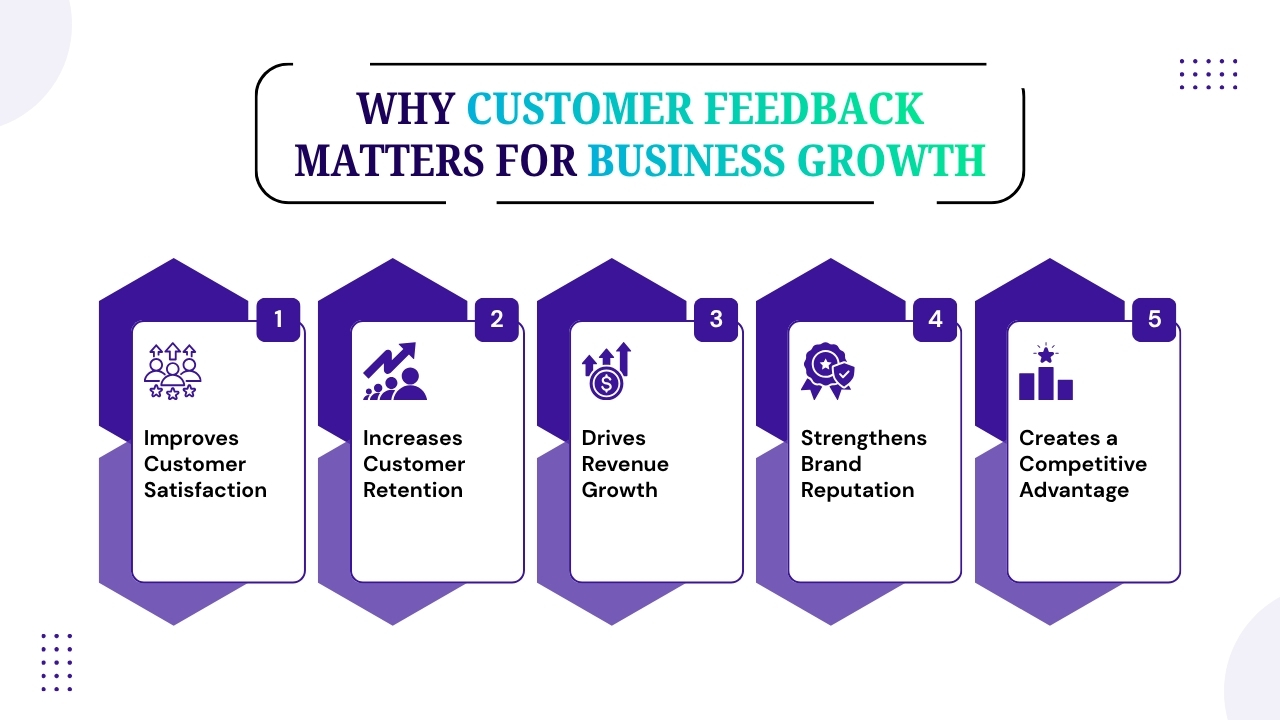
Customer feedback is valuable because it directly affects business growth, customer relationships, and overall business performance.
When businesses acknowledge customer opinions and work on their suggestions, then businesses can make better decisions, improve customer experiences, and increase their position in the market.
1. Improves Customer Satisfaction
Customer feedback helps businesses to know the problems faced by them and resolve their problems before they become major problems.
Understanding customer expectations helps companies to improve their products, services, and support processes.
Consistently higher levels of customer satisfaction cause better customer experiences, less complaints from customers, and stronger long-term relationships with customers.
2. Increases Customer Retention
Retaining existing customers is more affordable than acquiring new customers. If customers are satisfied then they remain loyal and most likely to remain loyal and make repeat purchases and make repeat purchases and engage regularly with the brand.
High level of customer retention creates stable revenue and reduces customer churn over time.
Also Read: Customer Sentiment Platform vs Traditional Surveys
3. Drives Revenue Growth
Happy customers who purchase high priced products are most likely to purchase additional products or upgrade service. By providing good experiences to customers encourages them to buy again from the brand which increases customer lifetime value.
When customer loyalty increases, businesses can achieve consistent revenue growth and improve long-term profits.
4. Strengthens Brand Reputation
Customers usually share their experiences online through customer reviews, social media posts, and customer recommendations.
When businesses have overall positive feedback from customers increases visibility of the brand and builds trust among potential customers. Having a good business reputation attracts new customers and ensures confidence in the business.
Also Read: Brand Reputation Management Software
5. Creates a Competitive Advantage
Businesses that actively acknowledge customer feedback can adapt more instantly than their competitors. Customer insights helps companies to innovate their products, solve customer problems efficiently, and respond to changing market demands.
Using customer feedback strategically helps businesses to have a competitive advantage in the market.
Also Read: Why Customer Reviews Are Important for Business Growth
Using Customer Feedback to Improve Customer Satisfaction and Increase Revenue
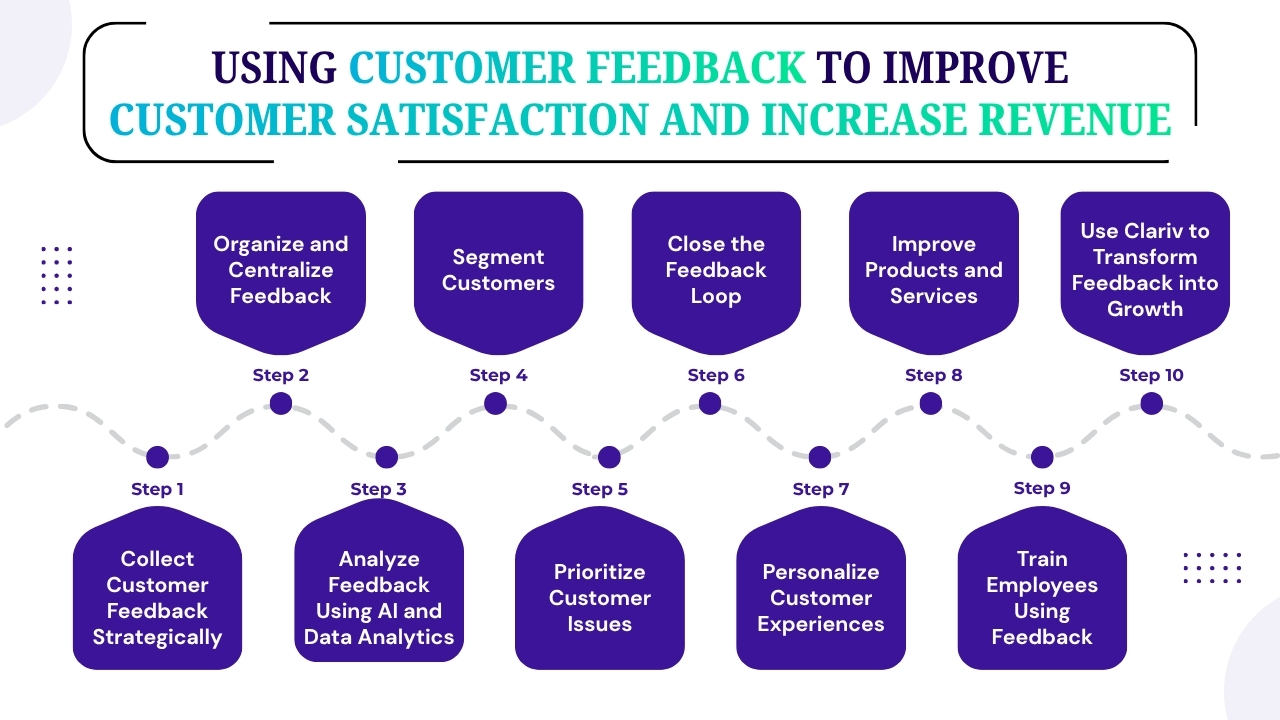
Step 1: Collect Customer Feedback Strategically
By collecting customer feedback strategically is the initial step toward using customer insights to increase business growth.
Businesses follow a structured process to gather customer feedback from different channels throughout all customer phases.
When companies consistently gather customer feedback, it helps companies to know the expectations of customers, identify problems faced by them, and make data-driven decisions which increases customer satisfaction and customer loyalty.
Businesses can collect valuable customer feedback through the following methods:
- Surveys: Businesses should include targeted queries in surveys like “How satisfied are you?”, “What can we improve?”, and “Would you recommend us?”
- Online Reviews: Online review platforms consistently track customer reviews regularly to identify product problems, service challenges, and customer expectations.
- Social Media Monitoring: This involves tracking brand mentions, hashtags, comments, and customer conversations to know sentiments.
- Customer Support Data: This involves analyzing customer queries, complaint patterns, and time required to reveal recurring problems.
- Email Feedback: Send post-purchase emails asking customers to “Rate your experience” or “Tell us what we can improve.”
Collecting customer feedback from different sources helps businesses to understand customer requirements, improve customer experiences, and build strong foundations for sustainable business growth.
Also Read: How AI Can Analyze Customer Feedback & Why It Matters the Most in 2026
Step 2: Organize and Centralize Feedback
Many businesses face difficulty to use customer feedback effectively because valuable customer opinions are spread across several platforms.
When businesses organize and centralize customer feedback into a single system it helps to know about the complete view that customers have about the brand instead of individually analyzing customer feedback.
By combining data from different sources, helps companies to identify customer patterns, track customer behavior, and make more informed decisions.
Businesses should centralize feedback from:
- Surveys: It involves collecting customer opinions through surveys.
- Social Media: It involves tracking comments, mentions, and customer discussions on social media.
- Online Reviews: Track customer experiences and product feedback.
- Customer Support: Analyze support interactions and recurring issues.
- CRM Systems: Access customer history and engagement data.
- Email Responses: Review post-purchase feedback and suggestions.
Centralizing customer feedback offers several benefits:
- Faster Analysis: It enables quick analysis to identify customer patterns and problems.
- Better Decision-Making: It enables informed business decisions by using detailed data.
- Improved Collaboration: It enables teams to access and work with the same customer insights.
When businesses centralize customer feedback helps businesses to respond instantly, improve customer experiences, and support long-term business growth.
Also Read: AI Tools to Analyze Customer Reviews
Step 3: Analyze Feedback Using AI and Data Analytics
Analyzing customer feedback manually will be a time consuming and inefficient process when businesses receive large volumes of data every day.
AI and data analytics tools help companies to process thousands of customer feedback instantly and transform them into actionable insights.
These tools help businesses to identify customer patterns, understand customer behavior, and make faster and data-driven decisions.
Businesses can use AI tools to analyze several areas:
- Customer Sentiment: These tools help to analyze customer experiences whether they are positive, neutral, or negative.
- Recurring Complaints: These tools detect frequent complaints raised by customers due to occurring problems like slow shipping, poor website navigation, or product defects.
- Customer Behavior Patterns: These tools help to identify patterns of customer buying habits, customer engagement, and customer satisfaction drivers.
- Predict Customer Churn: These tools recognize customers who may stop purchasing and take early action to retain those customers.
Modern AI platforms can automatically interpret customer comments, identify emerging customer patterns, and focus on crucial actions.
By reducing manual effort and improving decision accuracy, AI helps businesses respond faster, improve customer experiences, and build stronger customer relationships which support long-term business growth.
Also Read: How AI Sentiment Analysis Software Turns Customer Feedback into Growth Opportunities
Step 4: Segment Customers
Every customer does not have the same preferences, behaviors, or expectations. Segmenting customers helps businesses to segment their audience into smaller groups on the basis of shared characteristics, which allows them to deliver more personalized experiences.
Understanding the unique needs of each customer segment enables businesses to develop targeted marketing strategies, improve customer engagement, and increase customer satisfaction.
Businesses can segment customers in several ways:
- Demographics: This involves grouping customers based on age, location, industry, occupation, or other personal characteristics.
- Purchase Behavior: This involves segmenting customers as per customer spending habits, customer purchase frequency, and customer buying patterns.
- Satisfaction Levels: Businesses should categorize customers as promoters, passive customers, or detractors, based on the experiences with the brand.
- Engagement Levels: Measure customer interactions, which includes website activity, email responses, and social media engagement.
Customer segmentation helps businesses to provide relevant content, personalized offers, and customized communication.
It helps companies to find high-value customers and improve marketing efficiency. Understanding different customer groups helps businesses to build stronger relationships with customers, increase customer loyalty, and create better customer experiences which support long-term business growth.
Step 5: Prioritize Customer Issues
Businesses often receive large volumes of customer feedback which makes it impossible for them to solve every customer problem at the same time.
Focusing on customer issues helps organizations to focus their resources on the customers which have the greatest impact on customers and business performance.
When businesses have a structured approach ensures that critical problems are addressed instantly and efficiently.
Businesses should prioritize issues based on the following factors:
- Frequency: Businesses should find how often a specific customer problem happens and whether several customers are reporting the same problem.
- Business Impact: Businesses should analyze the way customer problems affect revenue, operations, or overall business performance.
- Customer Impact: Businesses should evaluate how severely the problems influence customer experience and satisfaction levels.
- Urgency: This involves finding how instantly the problems need to be resolved to prevent any further negative consequences.
Therefore businesses have to create an action matrix which helps businesses to rank issues as per their priority levels. Organizations should focus first on high-impact and high-urgency problems.
When businesses focus on customer problems effectively enables them to improve customer satisfaction, reduce customer complaints, and allocate resources more efficiently to support long-term growth.
Also Read: How to Manage Online Reviews for Your Business
Step 6: Close the Feedback Loop
Collecting customer feedback is only the first step, but businesses must also take action based on the feedback received by customers. Customers want to know that their opinions are valued and that their suggestions are leading to impactful improvements.
Closing this customer feedback loop shows a commitment of the company to customer satisfaction and helps to build long-term trust.
Businesses should focus on the following actions:
- Thank Customers: Show appreciation for their time, opinions, and valuable suggestions.
- Address Concerns: Respond quickly to customer complaints and resolve issues effectively.
- Implement Solutions: Make improvements based on customer feedback and identified pain points.
- Share Updates: Inform customers about the changes that have been implemented.
Businesses can communicate improvements through messages such as, “You asked for faster checkout. We simplified our payment process,” or “Based on your feedback, we improved website navigation.”
Closing the feedback loop strengthens customer relationships because customers feel heard and appreciated.
Organizations that regularly communicate improvements often experience higher customer retention, increased engagement, and stronger loyalty, which ultimately supports long-term business growth.
Step 7: Personalize Customer Experiences
Customers now expect businesses to get personalized experiences based on their interests, preferences, and their purchasing patterns of customers.
Personalization helps companies to create meaningful interactions with customers and build stronger relationships with customers.
When businesses use customer feedback and behavioral data enables businesses to provide valid content and personalized product recommendations that improve the overall customer experience.
Businesses can personalize customer experiences in several ways:
- Product Recommendations: Businesses should give recommendations on suggesting products or services based on past purchases and their browsing history.
- Customized Emails: Businesses should send personalized emails based on customer preferences and customer interests.
- Personalized Promotions: Businesses should focus on giving targeted discounts, special deals, and exclusive offers to customers.
- Relevant Content: Businesses should share valid content that align with the needs of customers.
Personalization provides several important benefits, including:
- Increased Engagement: This ensures that businesses interact more with relevant content and offers.
- Higher Retention: Businesses that offer personalized experiences to customers remain loyal to the brand.
- Improved Customer Lifetime Value: Customers are more likely to make repeat purchases with time that increases customer lifetime value.
When businesses offer personalized experiences to customers improve customer relationships, improve customer satisfaction, and support long-term business growth.
Also Read: How to Measure Customer Sentiment
Step 8: Improve Products and Services
Customer feedback is a valuable source for businesses to implement new innovations in their business. By considering customer suggestions and identifying common problems enables businesses to develop solutions that better meet customer expectations.
Improvements based on customer requirements helps businesses to remain competitive and provide greater value to their customers.
Businesses should focus on the following actions:
- Test Products Regularly: Businesses should implement quality checks on a regular basis and analyze performances of their products and services to ensure that they meet customer expectations.
- Fix Defects Quickly: Businesses should quickly resolve product issues and service problems to reduce any type of frustration from customers.
- Update Features: Businesses should improve existing features based on customer suggestions and changing market demands.
- Launch Improvements: Businesses should keep launching new products that improve usability, performance, and customer satisfaction.
When businesses implement new product innovations based on customer-centeredness, it helps them to develop products and services that align closely with customer needs.
With consistent product improvements help businesses to build trust, reduce customer complaints, and improve customer loyalty. Because when customers make new innovations as per customer feedback enables businesses to offer better experiences to customers and support long-term business growth.
Also Read: How to Track Customer Feedback in Real Time? Complete Guide 2026
Step 9: Train Employees Using Feedback
Customer feedback helps businesses to improve performances of staff and overall customer experiences. Such feedback enables businesses to know the strengths of staff, and about areas for improvements, and staff training requirements.
When businesses use customer insights helps companies to build targeted training programs for staff to give employees the essential skills required for providing exceptional services.
Businesses should focus employee training on the following areas:
- Communication Skills: Employees should be well trained to interact clearly, professionally, and empathetically with customers.
- Problem-Solving: Employees should be trained to identify customer problems and provide effective solutions to their problems instantly.
- Product Knowledge: Employees should have a clear understanding of products and services.
- Conflict Resolution: Businesses should prepare employees to handle conflicts calmly and professionally.
Evaluating customer comments helps businesses to identify employees who are high-performing and who deserve recognition and rewards.
Additionally customer feedback reveals the skills that need further improvement to guide staff training and initiatives for staff development.
Well trained staff provide better experiences to customers, increase customer satisfaction, and build stronger relationships with customers.
By consistently implementing training initiatives helps businesses to offer a customer-centered culture that supports long-term growth and success.
Also Read: How to Use Review Monitoring Software to Manage Your Online Reputation
Step 10: Use Clariv to Transform Feedback into Growth
Clariv helps businesses to turn customer feedback into insights that support data-based decisions and ensures long-term growth.
Instead of managing data spread across multiple channels, Clariv collects all customer data to a centralized dashboard which gives a complete view of customer experiences and satisfaction levels.
Clariv offers several key capabilities:
- Customer Feedback Analysis: It analyzes reviews, surveys, and customer comments to offer insights.
- Sentiment Monitoring: It tracks customer emotions and customer satisfaction patterns of the business seen over time.
- Dashboard Visualization: Dashboards show crucial patterns, performance indicators, and customer metrics of the business.
- Reputation Management: It tracks online perception of the brand among customers and topics discussed by customers about products or services.
- Trend Detection: Customers should identify emerging platforms before they become major customer problems.
- Automated Reporting: It generates reports that support strategic decisions.
Using Clariv provides several benefits like quick identification of customer problems, improved decisions, improved customer experiences, increased customer loyalty and a strong brand reputation.
When businesses proactively track customer feedback helps businesses to solve customer problems early, improve customer satisfaction, and build stronger relationships with customers.
Conclusion
Customer feedback is a valuable asset that enables businesses to achieve sustainable business growth and build stronger relationships with customers.
It provides insights about customer expectations, customer preferences, and customer experiences, enabling companies to make informed decisions which improve products, services, and overall customer satisfaction.
Businesses that actively acknowledge their customer opinions and identify customer problems and create more impactful experiences.
Using customer feedback effectively involves more than just collecting customer feedback. Businesses must organize and analyze data, focus on customer problems, personalize customer experiences, and close the feedback loop by improving communication back to customers.
Modern technologies like AI, data analytics, and customer experience management platforms like Clariv make this process simple by converting large volumes of customer data into actionable insights.
Businesses that consistently act on customer feedback can improve customer retention, improve brand reputation, and create a competitive advantage in the market.
Additionally, customer-driven decisions help organizations to innovate quickly and adapt to changing customer expectations.
Customer feedback should be viewed as an ongoing strategy instead of a one time activity. Companies that continuously track, analyze, and implement customer insights build a customer-centered culture which supports long-term success.
By placing customers at the center of every decision, businesses can build trust, drive growth, and establish a strong foundation for future success.
If you still have any query about how to use customer feedback to grow your business then you may write to us at Clariv and we are more than happy to assist you.