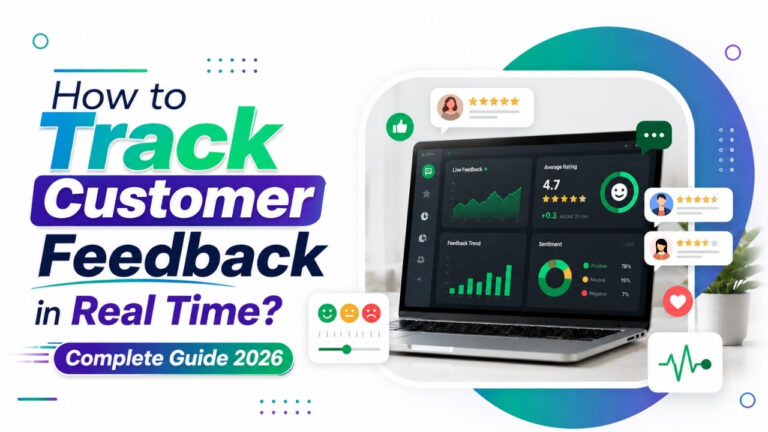
Your customers left 47 reviews about your business last week. You saw 23 of them.
The other 24 appeared on platforms you didn’t check. Three were escalating complaints needing immediate responses. Seven contained intelligence about recurring problems you still don’t know exist. Two mentioned switching to competitors.
This is the daily reality for organizations in 2026.
Harvard Business School research quantifies the stakes: a one-star rating improvement correlates with 5-9% revenue growth. BrightLocal data shows 88% of consumers evaluate how you respond to reviews when deciding whether to buy.
Customer feedback flows across Google, Yelp, Facebook, industry-specific platforms, and social media simultaneously. Manual monitoring doesn’t scale. By the time patterns appear in your aggregate ratings, they’ve already cost you customers and revenue.
The organizations outperforming their markets have built systematic infrastructure: review monitoring software that centralizes feedback, automates sentiment analysis, identifies patterns before crises, and delivers actionable intelligence in real time.
Your customers are already telling you what you need to win. The question is whether you’re systematically capturing it or letting competitors act on the intelligence you’re missing.
Also Read: Why Customer Reviews are Important for Business Growth
Why Online Review Monitoring Is Critical for Your Business?
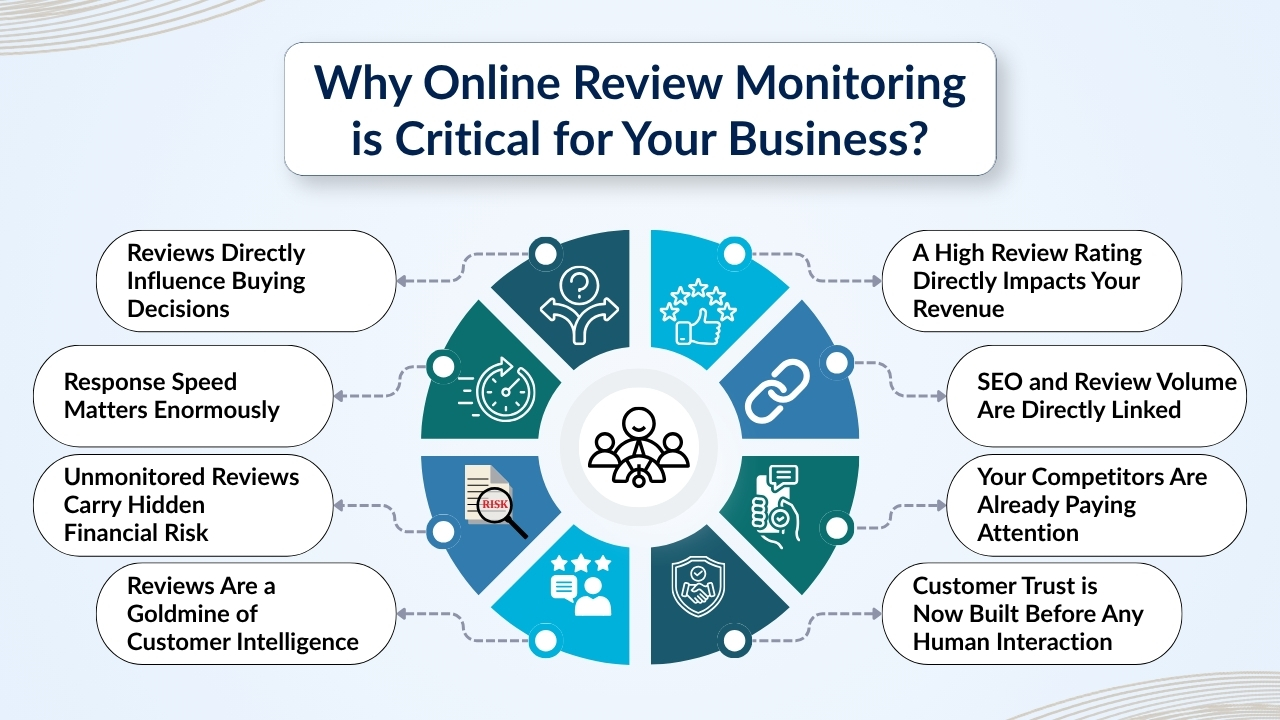
Before we get into how to monitor reviews, it is worth pausing on why it demands serious attention.
1. Reviews Directly Influence Buying Decisions
According to BrightLocal’s Local Consumer Review Survey, 98% of consumers read online reviews for local businesses before making a decision. More than three-quarters trust them as much as a personal recommendation from someone they know. For most customers, your review profile is not a supplement to their research; it is their first and often final impression of your business.
Also Read: How AI Sentiment Analysis Software Turns Customer Feedback into Growth
2. Response Speed Matters Enormously
A study by Harvard Business Review found that businesses that responded to customer reviews saw measurable increases in their overall ratings over time. When you respond to negative reviews within 24 hours, you significantly increase the likelihood that a dissatisfied customer revises their rating or, at the very least, feels heard enough not to escalate. Silence, on the other hand, is interpreted as indifference. And indifference is a brand position no business can afford.
3. Unmonitored Reviews Carry Hidden Financial Risk
Research from Moz estimates that a single negative article or review in top search results can cost a business up to 22% of its customers. When three or more negative results appear, that number climbs to 59%.
The customers lost to a review you never saw and therefore never responded to are gone quietly, without ever giving you the chance to make it right. That is not just a reputation problem. That is a revenue leak hiding in plain sight, and it is exactly why online reviews and monitoring need to be treated as an operational priority.
4. Reviews are a Goldmine of Customer Intelligence
Beyond reputation, reviews are one of the richest sources of unsolicited, unfiltered feedback a business has access to. Surveys get ignored. Focus groups are staged. Reviews are what customers actually think, written in their own words, unprompted.
According to a Qualtrics XM Institute report, companies that actively analyze customer feedback and act on it see revenue increases of 4–8% above their market average. Customer sentiment analysis turns that raw feedback into patterns your operations, product, and service teams can act on before problems become trends and trends become churn.
Also Read: Brand Reputation Management Software
5. A High Review Rating Directly Impacts Your Revenue
It is not just about perception. The numbers behind star ratings are surprisingly concrete. Research shows that moving from a 3-star to a 4-star rating can increase conversions by over 25%. A one-star increase on Yelp has been linked to a 5–9% increase in revenue for independent businesses.
Reviews management software does not just protect your reputation, it actively moves the needle on what customers are willing to spend and whether they choose you over the business listed right below you in search results.
Also Read: Google Review Management Software
6. SEO and review volume are directly linked
Google’s algorithm actively uses review quantity, recency, and response activity as local search ranking signals. Businesses that consistently earn and respond to reviews outperform competitors in local search even when every other SEO variable is identical.
This means your review monitoring software is not just protecting your reputation. It is quietly powering your discoverability. Every response you publish, every new review you earn, is compounding your visibility in the exact moment a customer is looking for what you offer.
7. Your Competitors are Already Paying Attention
While you are manually checking platforms or, worse, not checking at all, competitors who have invested in review management software are responding faster, catching problems earlier, and building a review profile that search engines and customers both reward. Reputation is increasingly a competitive differentiator, not in theory, but in practice.
Businesses with stronger, better-managed review presences consistently win more clicks, more calls, and more conversions from customers who were already searching for your category. The gap compounds over time. And, in no time, you will start to lose your ground.
Also Read: How to Measure Customer Sentiment
8. Customer Trust is Now Built Before any Human Interaction
Decades ago, trust was built through conversations, a salesperson, a referral, or a relationship. Today, that trust-building happens digitally, silently, and entirely through the experiences of strangers who reviewed you.
The importance of customer reviews lies in this shift: by the time a customer speaks to anyone on your team, they have already decided how much they trust you based on what your past customers said and how your business responded. Review monitoring tools give you the ability to actively shape that first impression, instead of leaving it entirely to chance.
Also Read: How AI Can Analyze Customer Feedback
How to Monitor Online Reviews Across Every Platform?
Knowing why online reviews and monitoring matters is one thing. Building a system that actually does it, consistently, at scale, without burning out your team is another.
The good news is that it does not require a large team or a complicated setup. It requires the right approach and the right review monitoring software working behind the scenes. Here is how businesses that do this well actually operate.
1. Centralize All Reviews Into One Dashboard
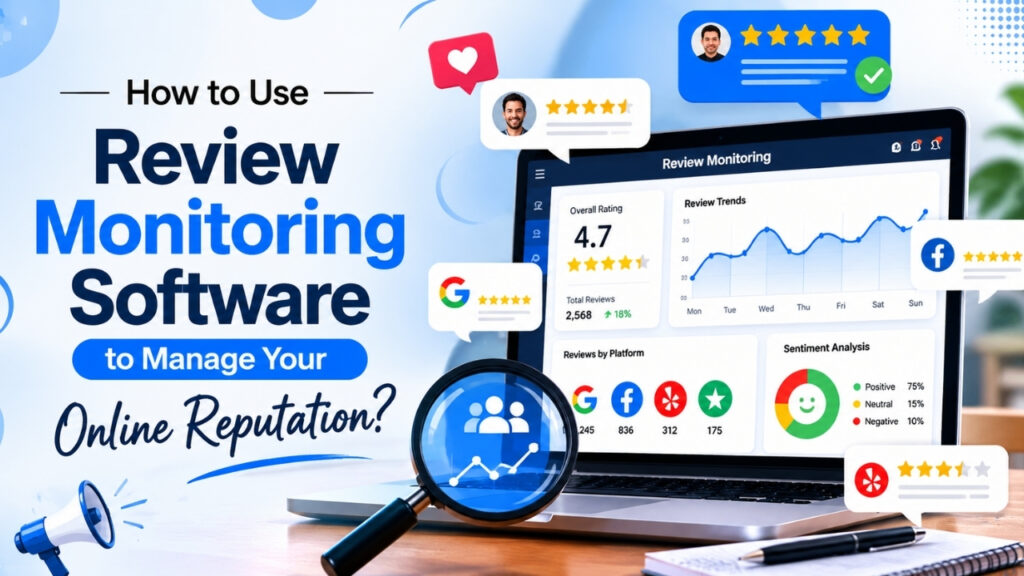
Logging into ten different platforms and finding out mentions and reviews every morning is not a system; it is a daily gamble on what you might miss. The right review monitoring software aggregates every review from every platform into a single, unified dashboard.
The best AI review management platform integrates easily and helps you gather reviews in one platform and dashboard.
And, you can:
- See reviews from 20+ platforms the moment they go live
- Filter by location, platform, rating, or sentiment in seconds
- Assign reviews to team members without leaving the platform
- Track response status so nothing slips through
For multi-location businesses, this is especially powerful. Leadership gets a consolidated view of reputation across every location with the ability to drill into any site, time period, or platform when needed. That visibility changes how decisions get made.
Also Read: Brand Reputation Management Software
2. Understand What Reviews Actually Mean With Customer Sentiment Analysis
A three-star review that says “food was fine, but the wait ruined the experience” is a completely different problem from one that says “rude staff, will never return.” Both are negative. Only one signal is an urgent people issue that needs immediate operational attention.
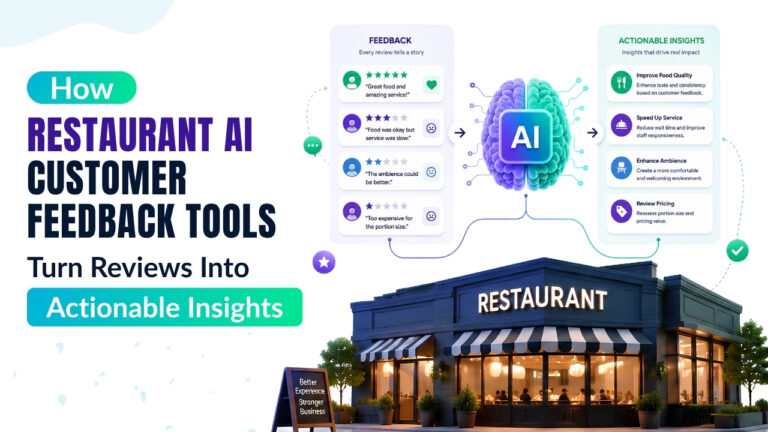
Customer sentiment analysis goes beyond star ratings to detect the emotion and context behind every review, automatically categorizing feedback by topic so your team knows exactly where to focus.
It helps businesses:
- Detects emotions: happy, frustrated, worried, surprised
- Tags feedback by topic: service, pricing, wait times, staff, product quality
- Surfaces whose locations or departments are underperforming
- Routes intelligence to the right people without manual sorting
Clariv, an AI customer sentiment analysis tool, achieves 95% sentiment precision at scale, turning thousands of raw reviews into clear, actionable intelligence. That is how leadership teams go from “we have a lot of reviews” to “we know exactly what our customers are saying and feeling” about our business.
Also Read: Restaurant Review Sentiment Analysis
3. Set Smart Alerts Before Problems Escalate
You do not need to read every review. You need to know the moment something is wrong.
Smart alerting within review management software flags critical issues before they spiral, notifying the right people instantly when a review crosses a defined threshold.
You get to see:
- Sudden spike in one-star ratings at a specific location
- A recurring keyword like “refund,” “broken,” or “never again.”
- Sentiment score drops below your defined benchmark
- Volume surge that falls outside normal patterns
Clariv’s AI identifies negative patterns up to 6x faster than manual monitoring. That speed is the difference between resolving a service issue on day one and discovering a brand crisis two weeks later, after it has already shaped the opinion of dozens of new potential customers.
4. Respond to Negative Reviews, Every Time
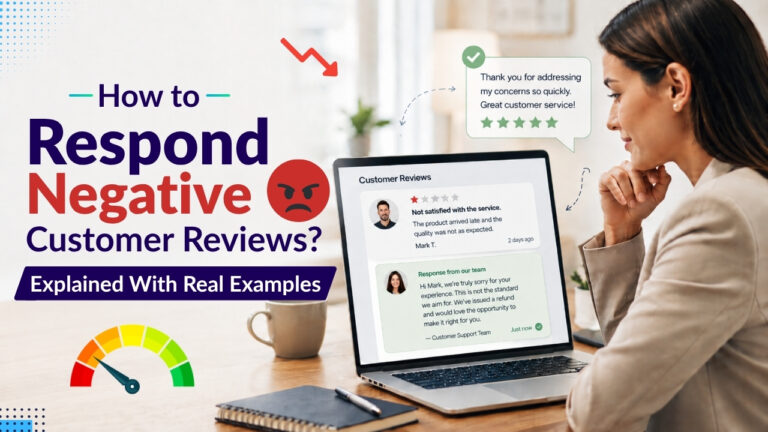
This is the step most businesses know they should do consistently and still do not. 63% of customers who leave a negative review expect a response. 53% expect it within seven days. Most businesses still do not deliver on either.
When you respond to negative reviews promptly and professionally, two things happen at once. The original reviewer feels heard and frequently updates their rating. Every future reader sees a business that takes accountability seriously, which builds the kind of trust that converts.
A response that works:
- Acknowledges the experience without being defensive
- Takes responsibility where it is warranted
- Offers a clear path to resolution
- Moves the detailed conversation offline
AI-assisted response tools surface suggested replies based on sentiment and topic, helping teams respond up to 40% faster without losing the human tone. The human still sends the message. The AI removes the friction that causes delays and inconsistency across teams and locations.
5. Turn Review Patterns Into Operational Decisions
Individual reviews are anecdotes. Patterns in reviews are data. And data, when it reaches the right people, drives change that actually improves the customer experience.
This is where online reviews and monitoring become genuinely strategic, moving beyond reputation management into operational intelligence.
It helps businesses understand:
- Recurring wait time complaints at one location = a staffing or process problem for operations to solve
- Consistent praise for a specific team member = a training benchmark worth replicating
- Sudden spike in product complaints = an early warning before returns and churn accelerate
- Sentiment drop after a policy change = immediate signal to reconsider or communicate better
Clariv’s predictive layer goes further, forecasting sentiment shifts and emerging risks before they escalate. For COOs and operations leads, this means acting weeks ahead of when problems would otherwise surface in sales or churn data. The feedback loop between customer experience and internal decisions becomes dramatically tighter.
6. Integrate Review Monitoring With Your Existing Stack
Review monitoring tools that live in isolation from the rest of your business, and deliver half the value they could. The real power comes when review data connects to the systems your team already relies on.
Easy integrations provide businesses with:
- A negative review triggers a support ticket automatically in your help desk
- A sentiment trend feeds directly into your content and social media calendar
- Review data enriches customer profiles in your CRM
- Multi-location performance rolls up into your analytics dashboards
Clariv integrates with 50+ tools out of the box. Setup takes minutes, not months, and it means your entire organization benefits from review intelligence, not just the team that manages responses.
7. Monitor Beyond Reviews, Track Social Comments and Support Interactions
Most businesses focus their online customer review management efforts on formal review platforms. But customer sentiment lives in more places than that, social media comments, support chats, app feedback, and in-store responses all carry signals that are just as telling.
- Social comments reveal how customers react to your brand in real time
- Support interactions highlight recurring friction points before they surface in public reviews
- In-app and website feedback captures sentiment at the exact moment of experience
- On-site feedback from kiosks or QR codes fills the gap for businesses with physical locations
A complete review monitoring software like Clariv captures all of it, not just the feedback customers leave on Google, but every conversation happening across every channel where your brand exists.
Also Read: Best Social Media Management Tools for NonProfits
8. Benchmark Performance Across Locations and Time
Monitoring reviews in isolation tells you what is happening right now. Benchmarking tells you whether things are getting better or worse and how you stack up against your own standards over time.
- Track average sentiment score by location, week over week and month over month
- Identify which locations consistently outperform and which need attention
- Measure response rate and response time as operational KPIs
- Compare review volume growth across different periods and campaigns
Review management software with built-in benchmarking like Clariv gives operations and leadership teams a clear, objective view of reputation health across the business and take proactive decisions.
Get Started with the Right Customer Online Review Management System?
By this point, you have a clear picture of what effective online reviews and monitoring looks like, centralized visibility, real-time alerts, customer sentiment analysis, predictive intelligence, and a response system that keeps your team consistent and fast across every platform.
The challenge most businesses run into is not understanding what needs to happen. It is finding a single system that actually does all of it without stitching together four different tools and hoping they talk to each other.
That is the problem Clariv was built to solve.
From the moment a review goes live on any of 80+ platforms, Clariv captures it, reads the emotion behind it, categorizes it by topic, and surfaces it to the right person, all without manual effort. When sentiment drops at a specific location, your team knows immediately. When a pattern starts forming across channels, the platform flags it before it becomes a crisis. And when it is time to respond, AI-assisted tools help your team move faster without losing the human tone that makes responses actually land.
Beyond online customer review management, Clariv also handles social media scheduling across 20+ platforms from the same dashboard, so the team managing your reputation and the team managing your content are finally working from one place instead of two.
The next step is simple. See how it works for your business, on your terms.
Start your free 14-day trial → or book a free demo with the Clariv team and walk through exactly how the platform fits your operation.
Final Thoughts
The businesses that grow their reputation are not the ones that never get a bad review. They are the ones who see every review, understand what it means, and act on it faster than their competitors do.
Effective online reviews and monitoring are not a one-time fix. It is an ongoing system that gets sharper and more valuable the longer it runs. And the businesses that build that system today are the ones with the clearest picture of their customers tomorrow.
Review monitoring software, customer sentiment analysis, and consistent online customer review management are no longer nice-to-haves. For any business that competes on customer experience, they are the baseline.
If you are ready to stop operating with blind spots and start turning customer feedback into a genuine growth lever, Clariv is worth a look.